Top Herbal Remedies for Asthma and Bronchitis Relief
Living with chronic respiratory issues can be tough. Many look for natural ways to help their lungs. Herbal remedies for asthma and bronchitis might offer a gentle way to feel better.
Learning how plants affect your body can help you take charge of your health. This knowledge can lead to better lung health.
Adding asthma relief with herbal medicine needs time and research. This guide offers tips based on science to help you choose wisely. You’ll see how ancient wisdom can boost your lung health.
Our aim is to give you steps to improve your lung function for the long term. We want you to breathe easier and feel more alive.
Understanding Asthma and Bronchitis
Knowing the difference between asthma and bronchitis helps you take better care of your health. Both affect your breathing, but they start from different causes. Looking into herbal remedies for asthma and bronchitis can be a natural way to manage them.
Asthma makes your airways narrow and swell, leading to breathing trouble. It can also cause coughing or wheezing. Finding the right treatment is key to feeling better.
Common Symptoms of Asthma
Asthma symptoms often show up after you’re exposed to certain things like pollen or cold air. You might hear a whistling sound when you breathe out, or feel tightness in your chest. Shortness of breath is another common symptom.
Looking for asthma relief with herbal medicine means knowing these signs early. If your chest feels heavy or you can’t breathe well, act fast. Being proactive helps you control your breathing better.
Recognizing Bronchitis Symptoms
Bronchitis makes your bronchial tubes inflamed, which carries air to your lungs. It’s usually a short-term problem after a cold or flu. You’ll notice a cough that brings up yellow or green mucus.
Other signs include feeling tired, having mild headaches, and body aches. You might also feel sore in your chest from coughing. Watching these symptoms closely is important to avoid more breathing problems.
The Role of Herbal Remedies
More and more people are using ancient wisdom in their health care. They find that natural remedies for respiratory conditions are gentle and supportive. These remedies aim to fix the problem, not just cover it up.
Why Choose Herbal Options?
Many choose plants to manage lung issues in a natural way. This helps your body stay healthy and breathe better. It’s a way to live better for longer.
Choosing bronchitis treatment with herbs means using ingredients that have helped for centuries. These plants can calm irritated tissues and help you breathe easier. Adding them to your life can help your lungs stay healthy.
Safety and Efficacy of Herbs
Finding the right balance between safety and effectiveness is key. Make sure to use high-quality, organic herbs. This ensures you get the most benefits without harmful additives.
See these natural remedies as part of your overall health plan. Being informed and careful helps you use nature’s power safely. The table below shows how these methods compare to traditional treatments.
| Feature | Herbal Approach | Conventional Care |
|---|---|---|
| Primary Focus | Holistic Support | Symptom Management |
| Action Speed | Gradual Improvement | Rapid Relief |
| Sourcing | Plant-based/Organic | Synthetic/Pharmaceutical |
| Integration | Lifestyle-based | Clinical Intervention |
Popular Herbal Remedies for Asthma
Struggling to breathe can make you look for gentle solutions. Many people turn to natural remedies for respiratory conditions to help. These plants can support your breathing and make your day easier.
Eucalyptus for Respiratory Health
Eucalyptus is known for opening airways and easing congestion. Its active part, cineole, thins mucus, helping you breathe better. You can use it in steam inhalation or as a topical treatment for relief.
“Nature is the best physician, providing us with the tools we need to restore balance and harmony within our own bodies.”
Mullein Leaves to Clear Airways
Mullein leaves have been used for centuries as a gentle expectorant. They help clear mucus from your airways. Adding this to your routine can help manage bronchitis treatment with herbs symptoms.
| Herb Name | Primary Benefit | Application Method |
|---|---|---|
| Eucalyptus | Reduces Congestion | Steam Inhalation |
| Mullein | Clears Mucus | Herbal Tea |
| Peppermint | Soothes Airways | Essential Oil |
Finding the right herbal support takes time and patience. Always watch how your body reacts to these natural remedies. By using these traditional methods, you can take charge of your respiratory health.
Effective Herbal Remedies for Bronchitis
When you face bronchial inflammation, certain herbs can help. They target the root causes of your symptoms. These natural options support your lungs gently. Many people use them as herbal remedies for respiratory infections to breathe better.
Thyme’s Antimicrobial Properties
Thyme is more than a kitchen spice; it’s a lung health powerhouse. It contains thymol, a natural antimicrobial agent. This compound fights off bacteria that cause bronchial inflammation.
Adding thyme to your wellness plan strengthens your respiratory system. It loosens mucus, making it easier to clear your airways. It’s a top choice for alternative treatments for asthma and other lung conditions.
Licorice Root for Soothing Cough
If you have a persistent, dry cough, licorice root is your ally. It acts as a demulcent, creating a protective film over irritated tissues. This soothing action reduces coughing and helps your airways heal.
Licorice root calms spasms in the bronchial tubes. It offers lasting comfort during recovery. Here’s how these herbs help your respiratory system:
| Herb | Primary Benefit | Best Use Case |
|---|---|---|
| Thyme | Antimicrobial | Clearing mucus and infection |
| Licorice Root | Demulcent | Calming dry, irritated coughs |
| Mullein | Expectorant | Reducing airway inflammation |
Combining Herbs for Enhanced Benefits
Blending the right herbs can lead to better results than using them alone. This idea of synergy is key in many alternative treatments for asthma. By mixing herbs that target different symptoms, you get a stronger support system for your lungs.
For example, you might mix an herb that fights inflammation with one that opens up airways. This two-step approach helps you manage your health better. It’s a smart way to create a wellness routine that meets your needs.
Herbal Blends for Asthma Relief
To make your own blends, focus on using high-quality, organic ingredients. Choosing pure, strong herbs ensures your body gets the most benefits. Organic sourcing keeps out harmful pesticides or chemicals.
Try different ratios to find what works best for you. Many people find that using these blends regularly helps keep their breathing clear. These herbal remedies for respiratory infections and chronic issues are best made in small, fresh batches.
Synergistic Effects of Quality Ingredients
The magic of synergy occurs when two herbs’ compounds work together to enhance each other. This can lead to quicker relief and longer-lasting support for your respiratory system. Here’s a guide to common combinations that work well together.
| Herb Combination | Primary Benefit | Best Use Case |
|---|---|---|
| Thyme & Mullein | Clearing Mucus | Bronchial congestion |
| Eucalyptus & Peppermint | Airway Opening | Tightness in chest |
| Licorice & Ginger | Soothing Inflammation | Irritated throat |
The quality of your ingredients is crucial for your blends’ success. By choosing premium, sustainably sourced herbs, you invest in your long-term respiratory health. This careful approach turns simple plants into powerful tools for your daily wellness.
Herbal Teas to Alleviate Symptoms
Herbal tea is an ancient tradition that can boost your respiratory health. Drinking these warm teas daily is a gentle way to care for your lungs. They help by hydrating and soothing your airways.
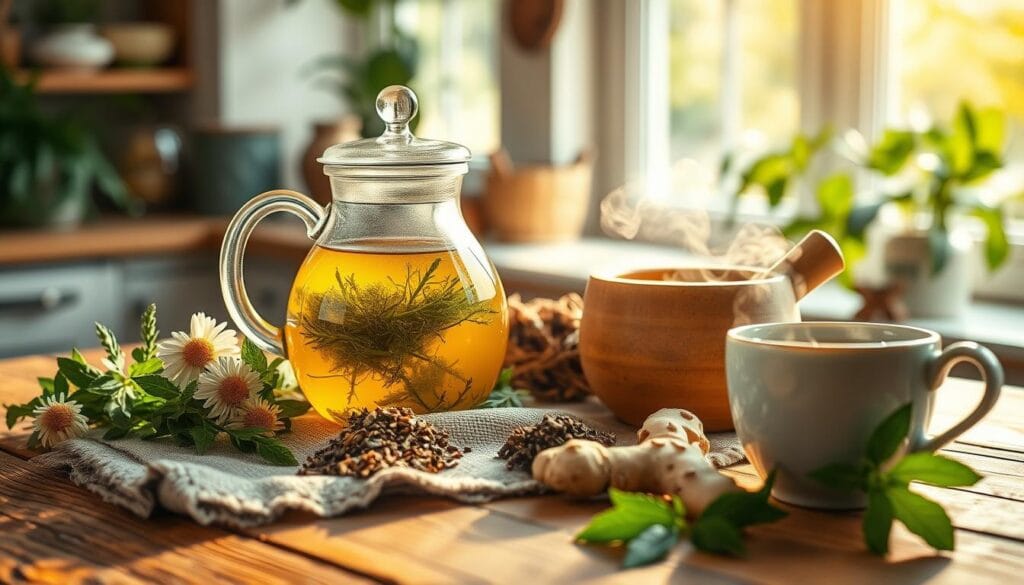
Ginger Tea for Inflammation
Ginger is known for its anti-inflammatory powers. It can reduce swelling in your airways. Drinking ginger tea as a warm beverage offers comfort when you’re feeling respiratory distress.
This simple root is a top natural solution for asthma and bronchitis. It calms the body’s inflammation.
“Nature itself is the best physician, and the simple act of drinking herbal tea can be a profound step toward healing.”
Peppermint Tea for Relief
Peppermint tea has a cooling effect that acts as a natural decongestant. The menthol in the leaves opens your airways, making breathing easier. Regularly drinking this tea can offer ongoing relief by thinning mucus and relaxing chest muscles.
Choosing these herbal teas is a soothing, non-invasive way to manage symptoms. They’re easy to make and are a great addition to your wellness plan.
Essential Oils for Asthma and Bronchitis
High-quality essential oils are a popular choice for natural solutions for asthma and bronchitis. These concentrated plant extracts offer a fragrant way to support your well-being when you feel under the weather. By integrating these oils into your home, you can create a soothing environment that promotes easier breathing.
When you explore holistic remedies for bronchitis, aromatherapy often stands out as a gentle, non-invasive option. It is important to remember that these oils should complement, not replace, your prescribed medical treatments. Always prioritize safety by using high-quality, therapeutic-grade oils and following proper dilution guidelines.
Lavender Oil for Relaxation
Stress can often trigger or worsen breathing difficulties, making relaxation a vital part of your health strategy. Lavender oil is widely recognized for its calming properties, which help soothe the nervous system. When you feel tense, the gentle scent of lavender can encourage deeper, more rhythmic breathing.
You can easily use lavender oil by adding a few drops to a diffuser in your bedroom. This practice helps create a peaceful atmosphere that supports rest and recovery. Many find that this simple ritual helps reduce the anxiety that often accompanies respiratory discomfort.
Tea Tree Oil’s Respiratory Support
Tea tree oil is highly regarded for its potent antimicrobial and decongestant properties. It is frequently used to help clear airways and reduce the feeling of congestion in the chest. When used in a steam inhalation, it can provide targeted support for your respiratory system.
To use tea tree oil safely, always dilute it with a carrier oil or add it to hot water for steam. Never apply undiluted essential oils directly to your skin or inhale them too closely. Following these precautions ensures you receive the benefits of this powerful oil without irritation.
| Essential Oil | Primary Benefit | Best Usage Method |
|---|---|---|
| Lavender | Stress Reduction | Diffuser or Pillow Spray |
| Tea Tree | Congestion Relief | Steam Inhalation |
| Eucalyptus | Airway Clearing | Chest Rub (Diluted) |
Dietary Considerations with Herbal Remedies
Your daily food choices are key to how well your body uses herbal supplements for breathing issues. Eating right helps your body heal better.
Eating a balanced diet helps your body absorb plant compounds better. Whole foods give your body what it needs to keep airways clear.
Foods That Support Respiratory Health
Anti-inflammatory foods are crucial for lung protection. Berries, leafy greens, and fatty fish are great because they fight oxidative stress.
These foods help natural solutions for asthma and bronchitis work better. Eating a variety of colorful veggies gives you lots of nutrients for lung health.
Important Nutrients for Lung Function
Some vitamins and minerals are key for breathing well. Magnesium relaxes airway muscles, making breathing easier.
Vitamin D is also important for your immune system and lungs. You can find it in pumpkin seeds, spinach, and fortified dairy or plant-based milk.
| Nutrient | Primary Benefit | Food Source |
|---|---|---|
| Magnesium | Muscle Relaxation | Almonds, Spinach |
| Vitamin D | Immune Support | Salmon, Egg Yolks |
| Antioxidants | Reduced Inflammation | Blueberries, Kale |
Lifestyle Changes to Complement Remedies
You can improve your lung health by combining natural remedies with daily habits. Herbal supplements for breathing issues offer key support. But, your daily habits are the base for lasting health. Small, thoughtful changes in your routine can help your body respond better to natural care.
Importance of Regular Exercise
Regular, moderate exercise is key to strong lung function. Exercise makes your heart and lungs work better together. This improves your lung capacity over time.
You don’t need to do hard workouts to see benefits. Simple activities like brisk walking, swimming, or light cycling can boost your heart health. Consistent movement also helps clear your airways and eases the load on your lungs.
Breathing Techniques and Their Benefits
Learning to breathe correctly is a powerful tool for managing breathing problems. Diaphragmatic breathing, or belly breathing, ensures full oxygen exchange. This method slows your breathing and makes it easier to breathe.
Practicing these techniques daily offers natural solutions for asthma and bronchitis from within. These habits calm your nervous system during tightness. Controlled breathing becomes a reliable way to stay calm and comfortable.
| Lifestyle Habit | Primary Benefit | Impact on Lungs |
|---|---|---|
| Brisk Walking | Cardiovascular Health | Increased Oxygen Intake |
| Diaphragmatic Breathing | Stress Reduction | Improved Airway Control |
| Swimming | Lung Capacity | Enhanced Respiratory Strength |
| Yoga Stretching | Chest Flexibility | Reduced Muscle Tension |
Consulting Healthcare Professionals
Your journey to better lung health is best when you connect your doctor with your wellness choices. Adding herbal remedies for lung health to your daily life needs careful planning and a doctor’s watchful eye. Talking openly with your medical team makes sure your wellness path is safe and effective.
Working with Natural Health Practitioners
Working with a natural health expert can help you make a plan just for you. They know a lot about how plants and extracts can help your body. They look for the real reasons behind your discomfort and suggest natural solutions for asthma and bronchitis that fit your life.
A good practitioner will check your health before adding anything new. They care about your long-term health by watching how you do and changing their advice if needed. This partnership lets you try holistic options with confidence and understanding.
Informing Your Doctor about Herbal Use
Telling your primary care doctor about any supplements or herbs you use is crucial. Even natural products can affect how well your medicines work or cause side effects. Being open with your doctor is the best way to avoid these problems.
When you talk about your interest in natural solutions for asthma and bronchitis, your medical team can give you a better care plan. Your doctor can check if there are any dangers and make sure your herbal remedies for lung health work well with your other treatments. This teamwork makes sure you get the safest and most effective care.
Conclusion: Embracing Herbal Approaches
Understanding nature’s power is the first step to better breathing. You can improve your comfort by choosing quality herbal remedies for lung health. These natural options gently support your body and meet your specific needs.
Exploring Your Path Forward
Your path to better breathing is filled with curiosity and action. Try different natural solutions for asthma and bronchitis to find what works for you. Keep a journal to see how plants and oils change your breathing over time.
Commitment to Lasting Vitality
Consistency is key for lasting success. Small, mindful changes in your daily life strengthen your respiratory system. Keep using herbal remedies for lung health as part of your wellness plan. Natural solutions for asthma and bronchitis help you live a more vibrant life.