Best Herbal Tea for Stress Relief You Need Today
Modern life is like a never-ending race. Finding calm in the chaos is key for our well-being. Many turn to herbal teas to manage daily stress.
Finding the right Tea for Stress is a personal journey. Your body reacts differently to herbs. So, the perfect blend is unique to you.
Adding a relaxing tea for stress relief to your day is a gentle anchor. These warm cups signal your mind to slow down. Nature’s tools help you find peace, one sip at a time.
Table of Contents
Understanding the Science Behind Natural Stress Relief
Managing daily stress is all about the chemistry of plants. Drinking these beverages introduces bioactive compounds into your body. These compounds support natural stress relief.
How Herbal Compounds Interact with Your Nervous System
Many herbs have phytochemicals that talk to your brain. These compounds interact with neurotransmitters like GABA. This helps control your mood and brings calm.
Herbal ingredients can change how your body reacts to stress. This is key to natural stress relief. It helps your body relax and recover.
“Nature is not a place to visit. It is home.”
The Role of Ritual in Reducing Daily Anxiety
Preparing tea does more than just calm your body. It’s a powerful mental anchor. The smell of herbs and the warmth of the mug are essential sensory cues.
These cues tell your brain it’s time to relax. This pause is crucial for natural stress relief in today’s world.
Regularly doing this helps your nervous system learn to relax. Over time, the ritual becomes a trusted way to handle anxiety and keep your emotions balanced.
Top Ingredients to Look for in Your Tea for Stress
Choosing the right tea for stress means looking at the active compounds in your favorite blends. Understanding how plants interact with your body helps you pick herbal stress remedies that support your well-being.
Chamomile and Its Calming Apigenin Content
Chamomile is known for its calming effects. It has a special antioxidant called apigenin. This antioxidant binds to receptors in your brain, which may lower anxiety and help you sleep.
Drinking a warm cup of chamomile tea gives you a natural way to calm your nervous system. It’s a gentle way to relax after a busy day.
Lemon Balm for Cognitive Function and Mood Support
Lemon balm, a mint family member, has been used for centuries to boost mood and brain function. It’s great at reducing restlessness and keeping your mind clear.
Many find lemon balm balances the mind, calming it without making them too sleepy. It’s perfect for a mid-day tea to help you stay focused and calm.
Valerian Root as a Traditional Sedative Alternative
Valerian root is a strong, natural sedative for those with a lot of tension. It’s often used in evening teas because it promotes deep, restful sleep by boosting GABA in the brain.
Its strong, earthy taste is why it’s often mixed with other herbs. Adding valerian root to your evening routine can help manage daily stress naturally.
The Best Herbal Tea for Stress Relief Options Available
Choosing the right tea for stress can be tough with so many options. Look for brands that use high-quality, organic ingredients. These are known as the best stress-relief teas for their strong effects and calming properties.
Traditional Medicinals Organic Chamomile with Lavender
This blend is great for those who want pure and traditional herbal wisdom. It mixes chamomile flowers with lavender for a gentle sedative effect. The herbs ensure a smooth, floral taste that quiets a busy mind.
Yogi Tea Honey Lavender Stress Relief
For a sweeter taste, try this tea for your daily routine. It has lemon balm and passionflower for a balanced mood. Users love it for masking the earthy taste of medicinal herbs with a sweet honey finish.
Pukka Herbs Relax Tea Blend
Pukka Herbs uses a mix of calming plants for a soothing experience. Their blend includes oat flowering tops, fennel, and marshmallow root. This tea promotes deep relaxation without artificial additives.
How to Properly Brew Your Calming Tea for Anxiety
Turning dried herbs into a strong tea is an art you can learn at home. It’s important to prepare it right to get the most benefits. By following these steps, you make a calming tea for anxiety that works well and tastes great.
The Importance of Water Temperature for Herbal Infusions
Many people use boiling water for all teas. But, hot water can burn delicate herbs, ruining their taste. Water between 190°F and 200°F is best for most herbal teas.
If you don’t have a special kettle, let boiling water sit for two minutes before using. This helps keep the plant’s good stuff in your tea. It makes your relaxing tea for stress relief even more soothing.
Steeping Times to Maximize Therapeutic Benefits
Being patient is key when making your tea. Quick steeping might give a light taste, but it misses out on many benefits. Steeping for 5 to 10 minutes lets the water soak into the plants fully.
Always check your tea’s package for the best steeping time. Some herbs need longer than others. Getting the steeping time right makes a big difference in your calming tea for anxiety.
Covering Your Cup to Retain Volatile Essential Oils
Covering your mug is a crucial step many miss. The good stuff in herbs is in their essential oils. If you don’t cover your cup, these oils evaporate.
Using a saucer or lid keeps these oils in your tea. This simple trick makes your relaxing tea for stress relief more aromatic and effective. You’ll feel the difference in every sip.
Integrating Stress-Reducing Herbal Teas into Your Daily Routine
Adding a simple tea ritual to your day can boost your mental health. Being consistent is key when using natural ways to manage stress. By making tea a habit, you build a strong foundation for balance.
Creating a Morning Mindfulness Practice
Begin your day with a quiet ritual. Spend ten minutes on a morning practice instead of checking emails. Choose a best stress-relief tea to focus your mind. This act of self-care sets a calm tone for the day.
Using Tea as a Mid-Day Reset for Work Stress
Work stress can lead to mental exhaustion and anxiety. Take a break to enjoy stress-reducing herbal teas. This sensory break resets your nervous system, helping you focus better.
Intentional breathing while your tea steeps enhances its calming effects. Stepping away from screens signals a shift from stress mode. This practice boosts productivity without losing peace of mind.
Establishing a Bedtime Wind-Down Ritual
Your evening routine signals the end of the day. A warm herbal infusion lowers your heart rate and prepares you for sleep. Choose the right stress-reducing herbal teas for a refreshing morning.
Keep this time screen-free for the best benefits. Consistently following these steps makes best stress-relief teas a comforting part of your day.
Comparing Different Types of Stress-Reducing Tea Blends
It’s important to know the differences between various stress-reducing tea blends. With so many options, choosing the right one can be tough. By looking at the ingredients and quality, you can pick a tea that helps your well-being.
Single-Herb Infusions Versus Complex Proprietary Blends
Single-herb teas offer a pure experience. They let you see how a specific plant, like chamomile or lemon balm, affects you. They’re great for beginners who want to learn how their body reacts to different plants.
On the other hand, complex blends mix several herbs for a stronger effect. These stress-reducing tea blends work on different parts of the nervous system. They can offer quick relief from daily stress.
Caffeine-Free Options for Evening Consumption
For evening use, look for a tea to reduce stress that’s caffeine-free. Even a little caffeine can mess with your sleep and make you feel restless. Always check the label to make sure it’s caffeine-free.
Herbal teas are naturally free from caffeine. They help you relax in the evening. This is key for a good night’s sleep and managing stress.
The Benefits of Loose Leaf Versus Tea Bags
Loose leaf tea offers a more intense flavor and aroma. This is because it has larger plant pieces. It gives a richer experience that can make your stress-relief ritual more enjoyable.
Tea bags are convenient but may not be as potent. Look for high-quality bags that allow for good water flow. This ensures you get the most out of your tea.
| Feature | Single-Herb | Proprietary Blend |
|---|---|---|
| Focus | Targeted effect | Synergistic support |
| Complexity | Simple | Multi-layered |
| Best Use | Testing sensitivity | Comprehensive relief |
Safety Considerations and Potential Interactions
When you’re looking for natural stress relief, it’s key to make smart choices. Herbal teas can be calming, but they’re active substances. Being careful helps you enjoy their benefits without any bad side effects.
Consulting Your Healthcare Provider Before Starting New Herbs
Before adding a new herbal tea to your routine, talk to your doctor first. This is crucial if you have health issues or chronic symptoms. Your doctor can give advice tailored to your health.
They can check if certain herbs are safe for you. They might also tell you the right amount to avoid problems. This way, you can feel confident as you try new ways to help your mind.
Understanding Potential Allergic Reactions to Asteraceae Plants
Teas like chamomile are from the Asteraceae family. If you’re allergic to ragweed, marigolds, or daisies, you might react to these teas. Start with a tiny amount to see how you react.
“Herbal medicine is not without its risks; understanding the botanical profile of your tea is just as important as enjoying its flavor.”
Signs of an allergic reaction include skin rashes, itching, or breathing trouble. If you see these signs, stop using the tea right away and see a doctor. Knowing your allergies helps you pick safer options for natural stress relief.
Monitoring Interactions with Prescription Medications
Herbal teas can change how your body handles medicines. For instance, some herbs might make sleep aids stronger or affect blood thinners. Always tell your pharmacist or doctor about your herbal tea use.
| Safety Factor | Action Required | Priority Level |
|---|---|---|
| Medication Review | Consult your doctor | High |
| Allergy Check | Review plant family | Medium |
| Dosage Tracking | Start with small cups | Low |
Keeping a simple log of your tea use and any changes you notice is helpful. This info helps you talk to your healthcare team. By being careful, you keep your health safe while enjoying your favorite teas.
Sourcing High-Quality Tea to Reduce Stress
Not all dried herbs are the same. The quality of your supplier affects how well your tea works. Choosing high-quality herbs means your herbal stress remedies will help your nervous system more. Researching your sources makes your tea a reliable wellness tool.
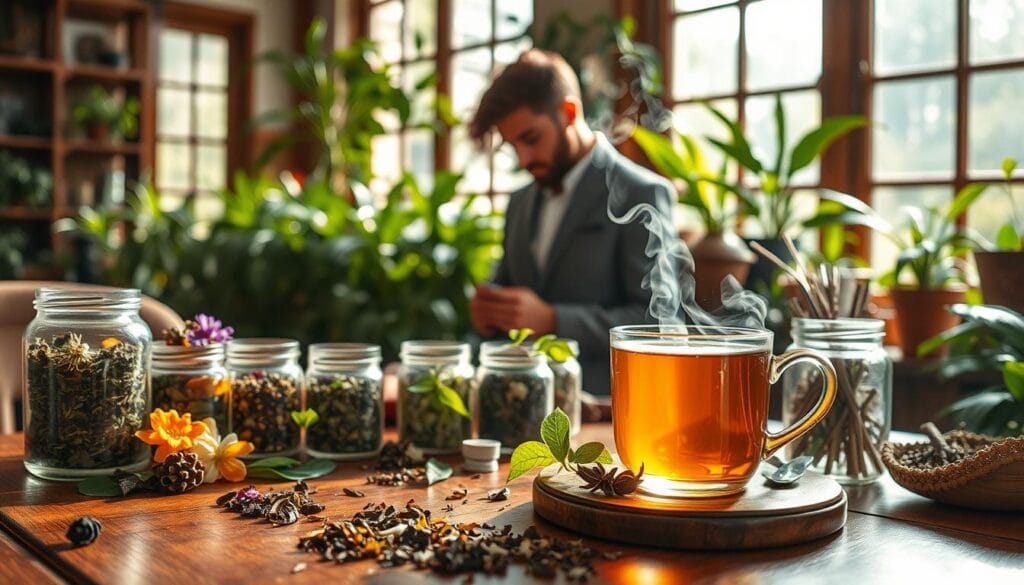
Identifying Organic and Fair-Trade Certifications
Look for labels that show your herbs are pure. Organic means they were grown without bad chemicals. This is key for herbs that calm you down.
Fair-trade labels also matter. They show farmers were treated right and worked safely. Choosing these products helps a fair supply chain for your stress-reducing herbal teas.
Why Freshness Matters for Potency and Flavor
Freshness is key for strong tea. Volatile oils that help you relax fade over time. Try to buy herbs that were picked and dried in the last year.
Good herbal stress remedies look bright and smell strong. If your herbs are dull or smell weak, they’ve lost their power. Always check the packaging for when they were harvested.
Storing Your Herbs to Prevent Oxidation
Keeping your tea fresh is crucial. Light, heat, and moisture make your herbs lose their good stuff fast. This ruins the compounds that help you relax.
Keep your stress-reducing herbal teas in tight, dark containers. Store them in a cool, dark place. Don’t put them near the stove or in sunlight. These steps keep your tea fresh and effective until the last sip.
Lifestyle Habits That Complement Your Tea Ritual
Adding your favorite herbal tea to a wellness routine can change how you handle stress. A calming tea for anxiety offers quick relief, but your habits are key to lasting peace. Seeing your tea time as part of a bigger picture helps you find lasting calm.
Combining Herbal Support with Deep Breathing Exercises
Drinking tea with deep breathing can make its calming effects stronger. As you wait for your tea to steep, try box breathing or diaphragmatic breaths. This mix can calm your nervous system and help you relax.
“The breath is the bridge which connects life to consciousness, which unites your body to your thoughts.”
The Impact of Hydration on Cortisol Levels
Drinking enough water is key to managing stress. Dehydration can raise cortisol levels, the main stress hormone. Drinking stress-reducing tea blends all day keeps you hydrated and supports your body.
| Habit | Benefit | Impact on Stress |
|---|---|---|
| Consistent Hydration | Lowers Cortisol | High |
| Deep Breathing | Calms Nervous System | High |
| Mindful Sipping | Reduces Mental Clutter | Medium |
Creating a Sensory-Friendly Environment for Relaxation
Your surroundings affect how well you can relax. Dimming lights, playing soft music, or using a cozy chair can enhance your stress-reducing tea blends experience. A quiet, inviting space helps your mind unwind from daily stress.
Small changes in your environment can turn your tea time into a peaceful retreat. By creating a calm space, you tell your brain it’s time to relax. This approach ensures your calming tea for anxiety and your environment work together for lasting calm.
Conclusion
Making herbal tea a part of your daily life is a simple way to manage stress. You can turn a basic cup of hot water into a tool for your mental health.
Start by looking into brands like Traditional Medicinals, Yogi Tea, and Pukka Herbs. Each brand offers unique botanical benefits in your mug. You might find a floral note or earthy root that calms your mind after a long day.
Notice how your body reacts to these natural infusions. Keep a small journal to track which flavors comfort you the most. This helps you create a routine that fits your lifestyle.
Your journey toward better balance begins with a single sip. Enjoy the quiet moments you create for yourself. May your tea ritual bring you lasting peace and focus.