Top 6 Herbs for Deep Relaxation and Stress Relief
Finding peace in our fast world is hard. You face many tasks that make your mind and body tight. But, nature has herbs that can help you find balance again.

Adding natural plants to your day can soothe your nerves. These effective relaxation techniques are gentle and don’t use harsh chemicals. With the right herbs, you can stay calm even when your day is busy.
This guide looks at six herbs known for their calming effects. We’ll see how these plants help with Stress Relief and improve your health. Get ready to learn how natural solutions can change how you handle stress and find peace again.
Table of Contents
Understanding the Physiology of Stress
Your body has a complex alarm system to protect you from danger. When you face a challenge, your brain tells your adrenal glands to release hormones like adrenaline and cortisol. This quick response gets your muscles and heart ready for action.
This response is crucial for survival but meant to be short-lived. Yet, today’s fast-paced life often keeps it going too long.
How Your Body Responds to Chronic Pressure
When demands keep coming, your body finds it hard to stop the stress response. This constant alertness makes your heart rate stay high and blood pressure remain elevated. Over time, this can cause physical and mental exhaustion.
It’s key to manage stress effectively when your body stays in this state. Without action, your body may start showing signs of wear and tear. Look out for early signs like muscle tension, headaches, or constant fatigue.
The Long-Term Impact of Elevated Cortisol
Cortisol is important, but too much is bad. High levels can mess with your sleep, weaken your immune system, and harm digestion. It’s vital to include stress relief exercises in your daily routine to lower cortisol levels naturally.
By focusing on your well-being, you can avoid the damage caused by constant stress. Regular stress management helps you take back control of your health. Doing stress relief exercises regularly is a great way to reduce stress and find balance again.
| Feature | Acute Stress | Chronic Stress |
|---|---|---|
| Duration | Short-term | Long-term |
| Heart Rate | Temporary spike | Consistently high |
| Recovery | Rapid return to baseline | Delayed or incomplete |
| Health Impact | Minimal | Significant systemic risk |
The Role of Adaptogens in Stress Relief
Looking for stress relief techniques often leads to adaptogenic herbs. These plants help your body deal with today’s stress. Adding them to your routine helps manage daily stress better.
Defining Adaptogenic Herbs
Adaptogens are special plants. They must be safe and work on many stress types, not just one. They also help your body stay balanced.
These herbs don’t push your body into a specific state. Instead, they help you get back to a calm state. This makes them key for Stress Relief.
“Adaptogens are nature’s way of helping us maintain our equilibrium when the world around us feels chaotic and demanding.”
How Adaptogens Help You Maintain Homeostasis
Your endocrine system is key in handling stress. Adaptogens adjust the HPA axis, which connects your brain and adrenal glands. This prevents too much cortisol when you’re stressed.
The table below shows how adaptogens differ from stimulants. Stimulants can make stress worse, not better.
| Feature | Adaptogens | Stimulants |
|---|---|---|
| Primary Effect | Restores Balance | Increases Energy |
| Cortisol Impact | Regulates Levels | Spikes Production |
| Long-term Use | Safe & Sustainable | Risk of Burnout |
Using these stress relief techniques helps your body stay balanced. This balance keeps you focused and calm, even when things get tough. Regular use of these herbs keeps your body strong against daily stress.
Ashwagandha for Cortisol Regulation
Withania somnifera, also known as Ashwagandha, is a powerful herb for balance. It’s known for helping your body deal with stress. It works on the endocrine system, making it a natural way to manage Stress Relief.
Scientific Benefits of Withania Somnifera
Research shows Ashwagandha can help control the HPA axis. It lowers cortisol levels in adults. This is key for fighting off daily stress.
This herb also boosts brain function and emotional balance. It can lessen anxiety and make you feel more grounded. Its adaptogenic properties help your body handle stress better.
Recommended Usage for Daily Calm
To get the most out of Ashwagandha, use it regularly. Start with a standardized extract for best results. Experts recommend 300mg to 600mg daily, with food for better absorption.
Pay attention to how your body reacts as you start taking it. Benefits may take a few weeks, but everyone is different. Choose high-quality sources to avoid harmful additives and get the most Stress Relief safely.
Chamomile as a Traditional Calming Agent
For centuries, people have used the delicate chamomile flower to calm their nerves. This herb is known for its gentle, soothing effects. Adding it to your daily routine can help reduce stress and bring peace to your busy life.

The Science Behind Apigenin
Chamomile’s power comes from a compound called apigenin. When you drink chamomile tea, apigenin connects with special receptors in your brain. This helps calm your nervous system, a top stress relief technique today.
“The tea of the chamomile flower is a gentle balm for the spirit, offering a quiet sanctuary in every cup.”
Apigenin targets these receptors to reduce your body’s stress response. It acts as a natural sedative without making you feel drowsy. This makes it perfect for those who want to reduce stress without losing focus.
Brewing the Perfect Cup for Relaxation
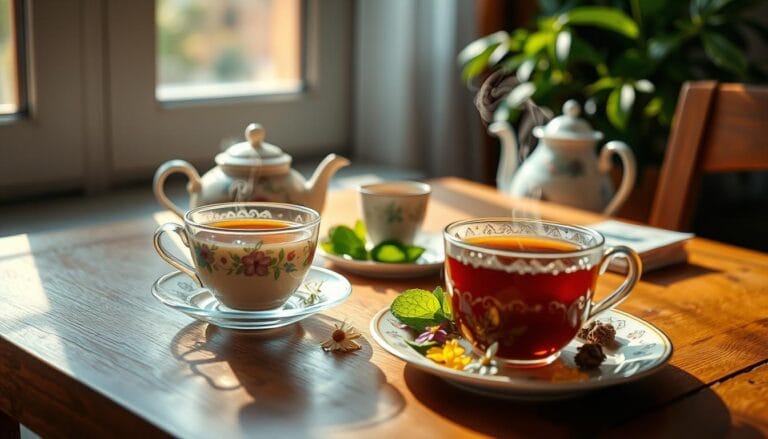
Getting the most out of chamomile tea depends on how you brew it. Use fresh, filtered water and avoid boiling it directly over the flowers. Steeping it for the right time ensures you get all the plant’s essential oils.
| Brewing Factor | Recommended Setting | Benefit |
|---|---|---|
| Water Temperature | 195°F – 205°F | Prevents bitterness |
| Steeping Time | 5 to 7 minutes | Full apigenin release |
| Covering the Cup | Use a lid or saucer | Retains volatile oils |
Covering your mug while the tea steeps is crucial. It keeps the beneficial oils in, not letting them escape with the steam. Once you get this right, a warm cup of chamomile becomes a key part of your emotional health.
Lemon Balm for Cognitive Ease
Discover how lemon balm’s citrus scent can boost your mental clarity. This herb is known for sharpening cognitive function and promoting relaxation. It’s perfect for those facing high-pressure situations, keeping you calm and alert.
Soothing the Nervous System
Lemon balm interacts with your nervous system to reduce tension. It balances neurotransmitters, helping you stay emotionally stable. This herb calms the mind without making you sleepy, unlike other sedatives.
When your day feels too much, lemon balm can help. It acts as a gentle shield against stress symptoms. It’s a top natural stress relief tip for those with busy lives.
Combining Lemon Balm with Other Botanicals
Pairing lemon balm with other herbs can boost its effects. Blending it with peppermint, for example, refreshes your focus and keeps your mood steady.
Here are some effective blends to try:
| Botanical Partner | Primary Benefit | Best Use Case |
|---|---|---|
| Peppermint | Mental Alertness | Mid-day focus |
| Passionflower | Deep Relaxation | Evening wind-down |
| Chamomile | Gentle Calm | General stress relief |
Try these blends to tailor your wellness routine. These stress relief tips help you stay productive and calm. Start with small amounts to see how your body reacts to these herbal allies.
Lavender for Sensory Relaxation
Turning your home into a peaceful place starts with lavender’s soothing scent. This purple flower is known for calming the mind and body. By using relaxation techniques, you can make a space that brings peace right away.
Aromatherapy and Stress Reduction Strategies
Aromatherapy is a top stress reduction strategy for those with busy lives. An essential oil diffuser spreads lavender’s calming effects throughout your home. It reminds you to breathe deeply and relax.
Try lavender room sprays or dried sachets in your bedroom too. These small steps create a calm atmosphere. When you smell lavender, your body starts to relax.
Internal vs. External Applications
It’s important to know how to use lavender safely. Applying diluted essential oils to your skin is common for quick relief. But, always mix it with a carrier oil to avoid skin irritation.
Using lavender inside, like in food or tea, needs careful thought. Only use food-grade lavender to avoid harmful chemicals. Always talk to a professional before adding new herbs to your diet.
Whether you inhale the scent or drink a calming tea, lavender is versatile. Adding these practices to your daily life helps keep your emotions balanced. By focusing on these relaxation techniques, you improve your well-being.
Holy Basil for Mental Clarity and Balance
Holy Basil is a key part of Ayurvedic wellness. It’s also known as Tulsi. This herb is famous for its ability to clear your mind and bring balance.
By adding it to your daily routine, you can reduce stress. You’ll also stay sharp and focused.
Tulsi as a Sacred Stress Reliever
In Ayurveda, Tulsi is seen as a sacred plant. It connects physical health with spiritual well-being. It acts as a powerful adaptogen, helping you deal with life’s challenges.
When you take this herb, you give your body tools to reduce stress naturally. It’s a great way to stay calm and alert.
The special chemicals in Holy Basil calm your nervous system. But it won’t make you sleepy. It’s perfect for staying alert and focused, even when things get tough.
Supporting Your Mood Throughout the Day
Keeping your mood balanced is key for staying productive and emotionally healthy. Holy Basil acts as a gentle tonic. It keeps your energy levels stable all day.
By using Holy Basil, you create a base for clear thinking. It’s a simple way to reduce stress and stay focused.
You can add Holy Basil to your life through teas, tinctures, or capsules. Many enjoy a warm Tulsi tea in the afternoon. It helps them refocus and feel grounded.
This small ritual keeps you present and calm. It helps you stay strong against daily stress.
Valerian Root for Deep Sleep Support
Getting deep, restorative sleep is key to managing stress. Valerian root is a trusted herb for this purpose. It tells your body it’s time to relax, calming your nervous system for recovery.

Addressing Insomnia and Restlessness
Insomnia often comes from a mind that won’t quiet down after a long day. Valerian root interacts with brain receptors to reduce anxiety and promote relaxation. This is a top stress relief tip for those with racing thoughts at night.
This herb also eases physical restlessness that keeps you awake. It relaxes muscles, helping your body rest deeply. Regular use can help you avoid sleep deprivation and reduce daily stress.
Best Practices for Evening Consumption
Timing is crucial for valerian root. Aim to take it 30 to 60 minutes before bed. This lets the active compounds work as you sleep.
Adding valerian root to your bedtime routine can greatly improve sleep. Choose from tea, capsules, or tinctures. Consistency is key. Good sleep hygiene with valerian root means waking up refreshed and ready for the day.
Integrating Herbs into Your Daily Mindfulness Practices
Combining herbs with mindfulness practices boosts your journey to peace. Herbs offer a calm base, but daily habits are key for lasting stress management. By matching your inner chemistry with your surroundings, you pave a path to wellness.
Creating a Stress-Free Living Environment
A stress-free living space is crucial for mental health. Remove clutter that causes anxiety and add calming elements like soft lights or plants. An orderly home helps your nervous system relax.
Set aside a space for wellness in your home. Make it free from digital distractions for better focus on stress relief exercises. Keep your herbal teas or tinctures nearby to remind you to pause and breathe.
Combining Herbal Support with Meditation
Mixing herbs with meditation boosts your mind’s calmness. Drinking chamomile or lemon balm tea before meditation can enhance relaxation. This signals your body to relax from alertness.
“Mindfulness is the aware, balanced acceptance of the present experience. It isn’t more complicated than that.”
Timing your herbs with your natural energy can improve results. Use the table below to pair herbs with mindfulness techniques for better stress management.
| Time of Day | Herbal Support | Mindfulness Technique |
|---|---|---|
| Morning | Holy Basil | Mindful Journaling |
| Afternoon | Lemon Balm | Box Breathing |
| Evening | Valerian Root | Guided Meditation |
Consistency is key to success. By making these mindfulness practices part of your daily routine, you enhance your herbs’ benefits. Over time, these actions will keep you calm, even when life gets busy.
Safety Considerations and Quality Standards
Exploring herbal wellness means focusing on safety and making smart choices. You want products that are pure and strong. This is key for good stress management.
Sourcing High-Quality Herbal Supplements
Not all herbal products are the same. The way they’re made matters a lot. Look for brands that show third-party testing results. This means the product is clean from harmful stuff.
Choosing organic, non-GMO products is smart too. This keeps your health safe. Make sure the ingredients are listed clearly and avoid secret blends.
Consulting with Healthcare Professionals
Talk to your doctor before starting any new herbal plan. This is crucial if you’re on meds, as herbs can interact with them. Your doctor can check if the herb is right for you.
Your doctor can also tell you the right amount to take. This way, you get the most benefit without risks. Being open with your doctor helps make your wellness plan safe and effective.
| Quality Indicator | Why It Matters | Actionable Step |
|---|---|---|
| Third-Party Testing | Verifies purity and potency | Check for COA documents |
| Organic Certification | Reduces chemical exposure | Look for USDA Organic seal |
| Professional Guidance | Prevents drug interactions | Consult your primary physician |
| Transparent Labeling | Ensures dosage accuracy | Read the supplement facts |
Conclusion
By using these six botanical allies, you’ve set a strong base for your emotional health. You now have the tools to handle daily stress with nature’s help and intentional habits.
Adding these herbs to your daily mindfulness practices helps you regain focus. You’ll see that small, regular changes can greatly improve your mood.
Your path to a stress-free life is personal. Try different mixes to find what suits your body best.
Creating inner peace takes time and effort. Use these natural aids to support your body as you build a balanced and clear life.