Natural Cure for Anxiety: 7 Herbs That Truly Help
Do you often feel overwhelmed by the fast pace of modern life? Many people now seek a natural cure for anxiety to regain their inner balance. Instead of relying solely on synthetic pills, you might find that botanical medicine offers a gentle, effective path toward better mental health.
Plants have supported human wellness for centuries. By choosing time-tested herbal solutions, you provide your body with the tools it needs to manage stress. These botanical allies work in harmony with your nervous system to promote a sense of calm.
Understanding how specific herbs influence your mood is the first step in your journey. You deserve to feel grounded and focused every single day. Let us explore seven powerful plants that can help you reclaim your peace of mind through holistic support.
Table of Contents
Understanding the Role of Herbal Medicine in Anxiety Management
Learning how nature affects your body is key to managing stress. Many people turn to herbal remedies for anxiety to help their mental health. These natural solutions support your body’s systems, not just hide symptoms.
How Herbs Interact with Your Nervous System
Herbs can change how your body works by affecting your endocrine and nervous systems. When you eat certain plants, they can interact with your body’s stress response. This helps keep your body balanced, even when things get tough.
These anxiety management techniques aim for long-term strength, not quick fixes. By feeding your nervous system, some herbs can lower stress hormones and calm you down. This natural way helps your body get better at handling stress over time.
Safety Considerations and Consulting Your Healthcare Provider
Even though natural remedies are popular, safety comes first. Always talk to a healthcare expert before starting any new treatment. This is crucial if you’re already on medication.
Getting advice from a doctor helps avoid any bad interactions with your current treatments. They can guide you on the right dosage and quality of supplements. Understanding how these herbs work with your body is key to using them safely.
Remember, anxiety management techniques should be part of a bigger wellness plan. Working with a doctor ensures you get the best and safest care for your mental health.
The Science Behind Finding a Natural Cure for Anxiety
Understanding how your body reacts to stress is key to finding a natural cure for anxiety. Research shows that certain plants can calm your nervous system. This knowledge helps you make better choices for your mental health.
Distinguishing Between Acute Stress and Chronic Anxiety
Your body handles short-term stress and long-term anxiety differently. Acute stress is a quick response to a specific event. Once the event is over, your body usually returns to balance.
Chronic anxiety, however, is ongoing worry that doesn’t go away. It needs a more detailed plan to manage. The table below shows the main differences to help you understand your needs.
| Feature | Acute Stress | Chronic Anxiety |
|---|---|---|
| Duration | Short-term | Long-term |
| Trigger | Specific event | Generalized or unknown |
| Physical Impact | Temporary tension | Systemic exhaustion |
| Recovery | Rapid | Requires consistent care |
Why Holistic Approaches Are Gaining Popularity in the United States
In the United States, more people are choosing holistic approaches to anxiety relief. These methods tackle the root causes of anxiety. Combining mindfulness for anxiety with herbal remedies creates a strong support system for your well-being.
This shift is due to a growing interest in evidence-based herbalism. It combines ancient wisdom with modern science. By adopting these holistic approaches to anxiety relief, you can manage your mental health effectively.
Ashwagandha for Stress Resilience
Ashwagandha is a top choice for anxiety relief. It’s known as Withania somnifera and has been used for centuries. It helps your body stay calm in stressful situations.
Mechanism of Action as an Adaptogen
Ashwagandha acts as an adaptogen. It helps control your body’s stress response. It targets the HPA axis, which manages cortisol levels.
Consistent use builds resilience. It doesn’t offer a quick fix. Instead, it helps your body adapt to stress over time.
Recommended Dosage and Forms
Choosing the right form of Ashwagandha is key. Experts recommend 300 to 600 milligrams of root extract daily. You can find it in capsules, powder, or liquid extract to fit your needs.
| Form | Best For | Absorption Rate |
|---|---|---|
| Capsules | Convenience and precise dosing | Moderate |
| Powder | Mixing into smoothies or teas | Fast |
| Liquid Extract | Rapid assimilation | Very Fast |
Potential Interactions to Watch For
While safe, be careful if you’re on other medications. Ashwagandha can interact with sedatives and thyroid medications. Always check with your doctor before adding it to your routine.
Also, be cautious when mixing it with other anxiety remedies. This can cause drowsiness or side effects. Start with a small dose to see how you react.
Chamomile as a Calming Agent
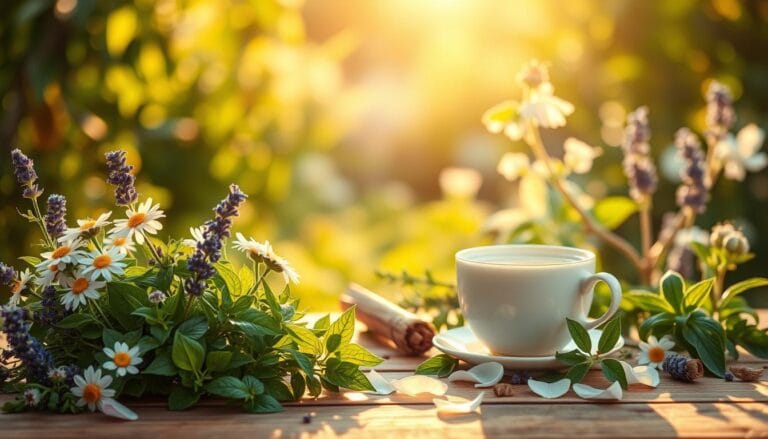
The delicate flowers of the chamomile plant hold surprising power for your mental well-being. This daisy-like herb has been a key part of traditional medicine for many years. It helps people find peace after long, taxing days.
The Role of Apigenin in Anxiety Relief
The main secret behind this herb is a compound called apigenin. This antioxidant works with your brain to reduce feelings of restlessness. It helps promote anxiety relief.
Apigenin interacts with brain pathways to calm the mind without heavy sedation. It gently nudges you toward relaxation. This makes it a top choice for those who prefer a subtle mood management approach.
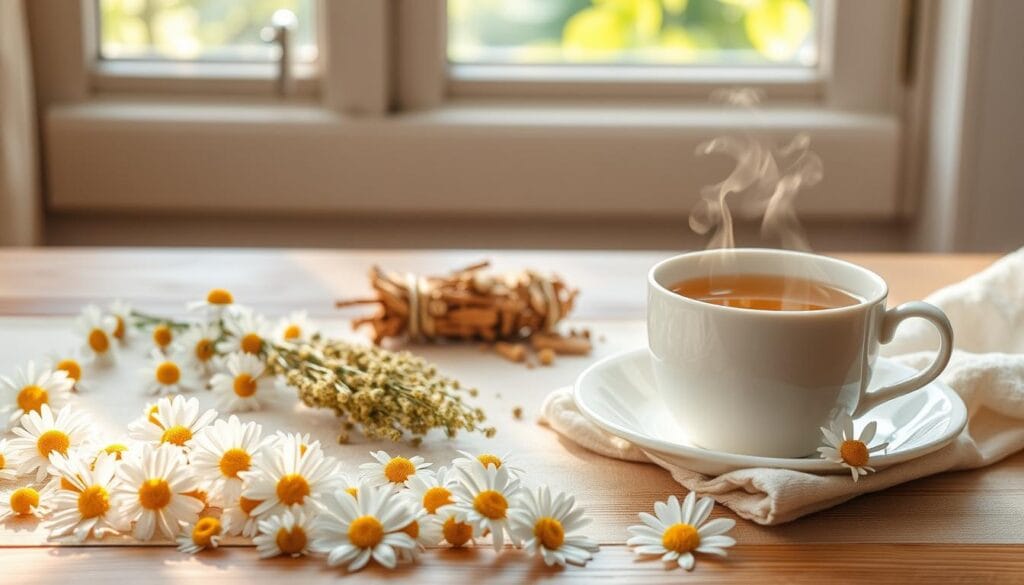
Brewing the Perfect Cup for Maximum Potency
To get the most from your dried chamomile flowers, use the right method. Always cover your mug while the tea steeps. This keeps the volatile oils from escaping with the steam.
Steep your tea for at least five to ten minutes in hot, but not boiling, water. This ensures the beneficial compounds are fully released. You’ll get the most effective anxiety relief possible.
Comparing Tea vs. Concentrated Supplements
Choosing between a warm cup of tea and natural supplements for anxiety depends on your lifestyle. Tea offers a calming ritual, while supplements give a precise dose of active ingredients.
| Method | Primary Benefit | Best For |
|---|---|---|
| Chamomile Tea | Ritual and Hydration | Daily evening relaxation |
| Concentrated Supplements | Potency and Convenience | Targeted, fast-acting support |
If you need a consistent, high-strength dose, natural supplements for anxiety might be best. But if you love sipping a warm drink, traditional tea is a great option.
Lavender for Aromatherapy and Internal Support
Lavender is a natural way to calm your mind. It’s a versatile herb that helps with both aromatherapy and internal support. By using it right, you can find anxiety relief every day.
Inhaling Essential Oils for Immediate Relief
Inhaling lavender essential oil is a quick way to calm your nerves. The scent goes straight to your emotional brain. This lowers your heart rate and helps you relax fast.
You can use a diffuser at home or carry a scented tissue. It’s great for sudden stress. Using aromatherapy regularly can be a key part of your anxiety relief plan.
Oral Lavender Supplements for Generalized Anxiety
Oral lavender supplements help with long-term anxiety. They contain concentrated lavender oil for inside use. Studies show they can help keep your mood stable and reduce worry.
Make sure to pick high-quality, food-grade supplements. Always follow the dosage instructions. Adding these supplements to your routine can help you feel better all day.
Safety Tips for Topical Application
Using lavender oil on your skin is popular, but safety first. Never put undiluted essential oil on your skin. It can cause irritation. Always mix it with a carrier oil like jojoba or coconut oil.
Do a patch test on your forearm before using it on a big area. If you get itching or burning, stop right away. These steps help you enjoy lavender’s benefits safely and keep your anxiety relief goals on track.
| Method | Primary Benefit | Best Use Case |
|---|---|---|
| Aromatherapy | Immediate calming | Acute stress moments |
| Oral Supplements | Long-term support | Generalized anxiety |
| Topical Application | Localized relaxation | Massage and skin care |
Lemon Balm for Mood Enhancement
Modern science is catching up with traditional herbalists on lemon balm. This fragrant herb, known as Melissa officinalis, is a gentle way to support your emotional well-being. It offers effective tips to reduce anxiety naturally.
Historical Use and Modern Research
For centuries, lemon balm has been known for lifting spirits and calming nerves. Ancient healers used it to relax and improve thinking during stress. Today, studies show it may help mood by affecting brain chemicals.
Studies suggest lemon balm can lead to a more stable and positive mood. It’s valued for soothing nerves without making you sleepy. This makes it great for managing daily stress.
Combining Lemon Balm with Other Herbs
Pairing lemon balm with other herbs can boost its effects. Mixing it with chamomile or passionflower creates a synergistic effect for deeper calm. These blends are often more effective than single herbs.
Mixing these plants creates a strong support system for your body. This is a practical tip to reduce anxiety naturally you can try at home. Make sure to use high-quality herbs from trusted sources.
Best Practices for Daily Consumption
To get the most from lemon balm, be consistent. You can drink it as a warm tea or take it as a tincture during the day. Steeping the leaves for at least ten minutes ensures you get the essential oils.
When you take it can also affect how you feel. Many find morning doses help stay calm, while evening cups help sleep. Adding these habits to your life can help you feel more resilient and peaceful.
Valerian Root for Sleep and Relaxation
Getting deep, restful sleep is key to feeling calm. When your mind is racing, sleep can be hard to find. Valerian root is a natural way to calm your mind and body for sleep.
Addressing Anxiety-Induced Insomnia
Insomnia is often linked to stress. Valerian root works with your brain’s GABA receptors to calm you down. This makes it easier to fall asleep.
This herb can change your sleep life if you’re always tired but can’t sleep. It helps your body relax and sleep better. Regular use helps your body learn to relax on its own.
Managing the Sedative Effects
Valerian root can make you feel groggy in the morning. Start with a small dose to see how you react. Finding the right balance is important.
If you feel too tired, try a smaller dose or take it earlier. Smaller, regular doses can help you stay alert during the day. This way, you get the benefits without feeling too sleepy.
Timing Your Intake for Best Results
When you take valerian root matters a lot. For the best results, take it 30 to 60 minutes before bed. This lets the herb work as you relax.
By following these tips, you can improve your sleep. Taking it at the right time helps your body and mind relax. This ensures you wake up feeling refreshed and ready to go.
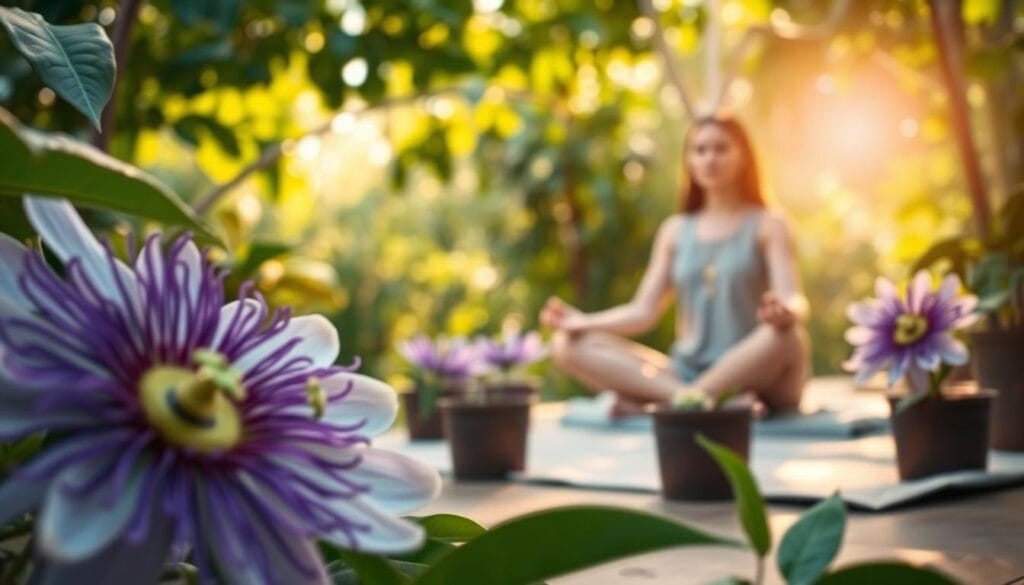
Passionflower for Nervous System Support
Looking for ways to manage anxiety? Passionflower might be the answer. This climbing vine is known for calming the nervous system. It can help you feel more at peace in today’s busy world.
Boosting GABA Levels Naturally
Passionflower works by boosting GABA in your brain. GABA is a natural sedative that lowers brain activity. This helps you stay calm and focused.
Forms of Passionflower: Tinctures vs. Capsules
Choosing how to take passionflower is important. Tinctures are liquid and absorb quickly, great for sudden stress. Capsules are easy to take and keep the herb’s levels steady.
| Feature | Tinctures | Capsules |
|---|---|---|
| Absorption Speed | Fast | Moderate |
| Convenience | Requires measuring | Easy to carry |
| Best Use | Acute stress relief | Daily maintenance |
Who Should Avoid Passionflower
Passionflower is usually safe for adults, but be careful if you’re on other meds. Especially if you’re taking sedatives or anti-anxiety drugs. Always check with a doctor first to avoid any risks.
Holy Basil for Holistic Balance
If you’re looking into holistic approaches to anxiety relief, Holy Basil is worth checking out. Known as Ocimum sanctum, it’s been used for thousands of years. It helps the body when it’s under a lot of stress.
Tulsi as a Traditional Ayurvedic Remedy
In Ayurveda, Tulsi is seen as a sacred herb. It’s known for supporting longevity and vitality. It’s called the “Queen of Herbs” because it balances the mind, body, and spirit.
It acts as an adaptogen, keeping your system balanced even when stress is high. Many see it as a top home remedy for anxiety. It works with your body’s natural stress response, without sedation or dependency.
Integrating Holy Basil into Your Daily Routine
Adding Holy Basil to your life is easy. You can enjoy it as tea or take supplements. The key is to be consistent. Here are some ways to incorporate it into your day:
| Form | Best Use | Frequency |
|---|---|---|
| Tulsi Tea | Morning ritual | 1-2 cups daily |
| Capsules | On-the-go support | Once or twice daily |
| Liquid Tincture | Fast absorption | As needed for stress |
Long-term Benefits for Mental Clarity
Using Holy Basil regularly can do more than just help you feel better in the moment. It can also improve your mental clarity and focus over time. It helps lower cortisol levels, which can make you feel more alert and focused.
By using these holistic approaches to anxiety relief, you can build a stronger nervous system. As you keep using Holy Basil, you’ll find it easier to handle daily challenges. It becomes a key part of your wellness routine.
Conclusion
Nature has many tools to help you feel emotionally balanced. Herbs like Ashwagandha, Chamomile, and Lavender are great allies. They help calm your nerves and bring peace.
For real relief, you need a mix of strategies. These herbs are just part of the solution. Adding mindfulness to your routine strengthens your mental health. Simple acts like deep breathing can help you stay calm.
Improving your mental health takes time and effort. Small habits each day can make a big difference. Always talk to your doctor to make sure these choices are right for you.
Learning about how your body reacts to these natural remedies is key. Knowing what works for you is your greatest asset in wellness. Begin your journey with confidence and care for your health.