
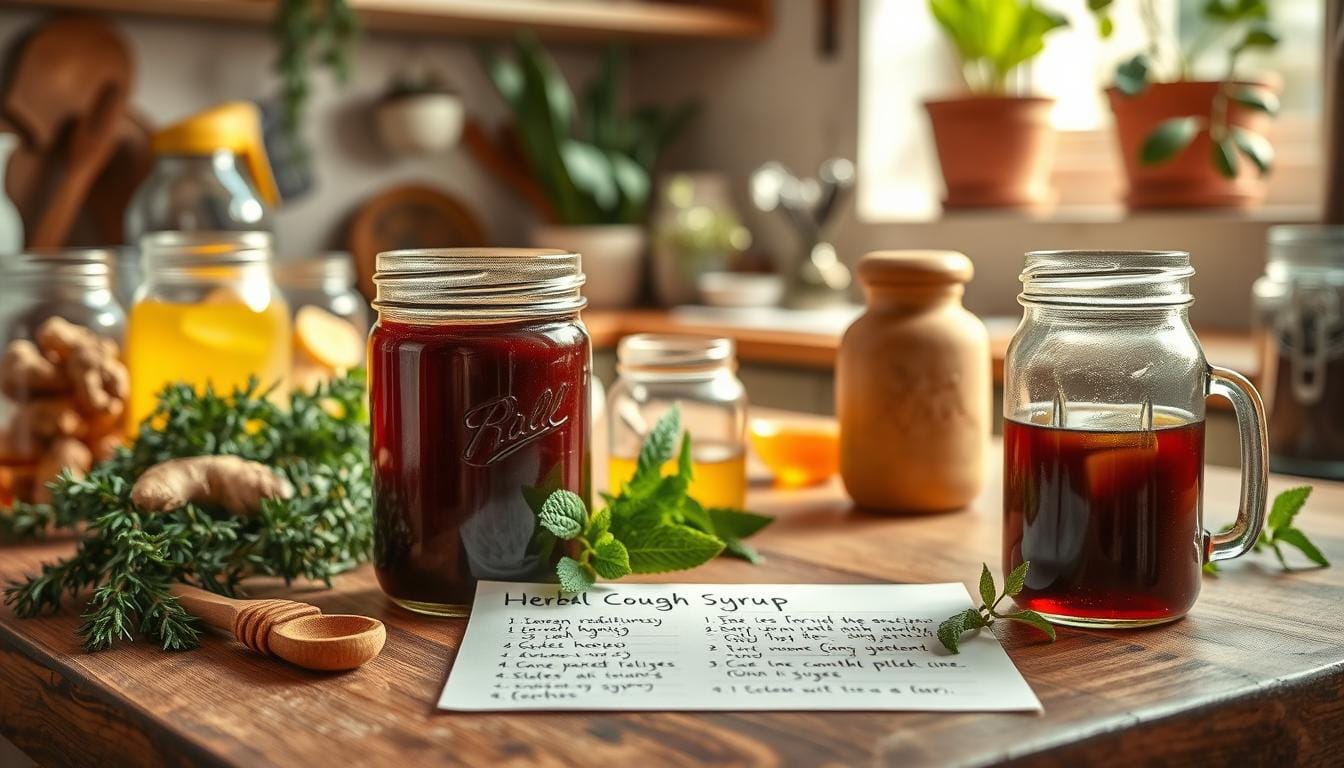
Easy Homemade Herbal Cough Syrup Recipes to Try Today
When cold and flu season hits, you might look for ways to ease a sore throat. Instead of using harsh chemicals, you can make your own remedies at home. These homemade herbal cough syrup recipes are a gentle way to soothe your throat.
By using natural ingredients, you can take control of your family’s health. Nature has many tools to boost your immune system during tough times. Choosing these natural methods means avoiding harmful additives and finding relief.
Learning to make these remedies is a rewarding skill. It shows you care about your health and want to live a pure life. Start your journey to better health today with these easy, tried-and-true solutions.
Table of Contents
Understanding Coughs and Their Causes
Your body uses a cough to keep your lungs clear. It happens when dust, mucus, or smoke get in your airways. This action is key for keeping your airways healthy and stopping infections.
Common Types of Coughs
Coughs are mainly dry or productive. A dry cough is often from throat irritation or allergies. It doesn’t bring up phlegm and can feel ticklish and persistent, especially at night.
A productive cough, on the other hand, brings up mucus or phlegm. This is a sign your body is fighting off an infection or congestion. Knowing the difference helps pick the best home remedies for cough.
When to Seek Medical Attention
Most coughs get better on their own, but some signs are serious. If you have a high fever, chest pain, or trouble breathing, see a doctor. These could mean pneumonia or other serious infections.
Also, get medical help if your cough lasts over three weeks or if you see blood in your mucus. Symptoms that don’t get better with rest or basic care need a doctor’s check-up. Don’t ignore signs of severe distress or rapid weight loss with a chronic cough.
Natural Remedies vs. Over-the-Counter Solutions
Many people choose between medicines and natural remedies. Over-the-counter medicines quickly stop coughs but can have side effects like drowsiness or dry mouth.
Home remedies for cough like honey or ginger soothe the throat and boost the immune system naturally. They help without harsh chemicals. Using natural remedies is a balanced way to care for your health long-term.
Benefits of Herbal Cough Syrups
When you make your own medicine, you know exactly what’s in it. Many people choose DIY cough remedies to avoid artificial stuff. They want only natural ingredients to help them get better.
Why Choose Homemade Remedies?
Making your own syrup lets you control the strength and taste. You can skip allergens and unwanted sweeteners found in store-bought products. This makes herbal medicine for cough a top pick for those who value simplicity.
Key Herbs for Cough Relief
Nature has many helpers for a sore throat. Marshmallow root soothes with its protective coating. Licorice root helps clear mucus, offering relief from coughs.
Safety and Side Effects
Natural ingredients are usually safe, but be careful. Use clean glass containers and store syrup in the fridge. If you’re pregnant, nursing, or on meds, talk to a doctor before trying new herbs.
| Feature | Commercial Syrup | Homemade Syrup |
|---|---|---|
| Ingredients | Often includes artificial additives | Pure, natural components |
| Preservatives | High levels for shelf stability | None (requires refrigeration) |
| Customization | Fixed formula | Fully adjustable to your taste |
| Cost | Higher per unit | Economical over time |
Essential Ingredients for Homemade Syrup
Making a homemade cough suppressant is easy with natural ingredients. Choose high-quality items to make a strong wellness routine. These ingredients help your body fight off illness.
When you make your own homemade cold and flu remedies, you know what’s in them. You can skip artificial stuff and use plants for relief. This lets you handle minor symptoms at home.
Honey: A Natural Soothing Agent
Honey is key for syrups because it’s thick and coats your throat. It’s a natural demulcent that soothes irritation. Use raw, local honey for the best benefits.
Ginger: A Potent Anti-Inflammatory
Ginger is great in homemade cold and flu remedies for its warmth. It fights swelling in your throat and airways. Fresh ginger adds a spicy kick to clear your airways.
Lemon: Boosting Immunity Naturally
Lemon juice adds a zesty touch and lots of Vitamin C to your syrup. Vitamin C is key for a strong immune system when you’re sick. Its acidity also helps clear mucus.
Other Useful Ingredients
You can add other herbs to your homemade cough suppressant for extra benefits. Garlic fights germs, and thyme soothes bronchial spasms. Try different herbs to make your syrup just right for you.
| Ingredient | Primary Benefit | Best Use |
|---|---|---|
| Raw Honey | Throat Coating | Base for all syrups |
| Fresh Ginger | Anti-inflammatory | Reducing swelling |
| Lemon Juice | Immune Support | Breaking down mucus |
| Garlic | Antimicrobial | Fighting infection |
Simple Herbal Cough Syrup Recipe
Making homemade herbal cough syrup recipes is easy and effective for your family. You don’t need a lab; your kitchen will do. Just a few steps can help you make a strong remedy for cold and flu season.
To start your natural cough syrup recipe, mix raw honey with a strong herbal tea. First, boil your herbs in water for twenty minutes to get their good stuff. Then, let the liquid cool down, strain the herbs, and mix in the honey until it’s smooth.

The right mix is key for taste and keeping it fresh. Use one part herbal tea to two parts honey. The honey keeps your homemade cough suppressant good for weeks if you store it in a cool, dark spot.
| Ingredient | Primary Function | Recommended Ratio |
|---|---|---|
| Raw Honey | Soothing and Preserving | 2 Parts |
| Dried Herbs | Therapeutic Relief | 1 Part |
| Filtered Water | Extraction Base | 2 Parts |
| Lemon Juice | Immunity Boost | Optional Splash |
Don’t forget to mark your jar with when you made it. Use clean, sterilized glass to keep your syrup fresh. With these easy steps, you’re on your way to natural wellness at home.
1
Now that you have a solid foundation, it’s time to improve your wellness solutions. Moving from theory to practice needs a clear plan. Proper organization is key to keeping your wellness journey consistent.
By organizing your collection, you can quickly find what you need. This system helps you focus on each medicine’s unique needs. When your notes are in order, you spend less time searching and more time improving.
We will now explore the first primary method in our guide. This method is crucial for reliable results in your kitchen. Mastering these preparation techniques will help you make high-quality results with confidence.
Keep this section handy for starting a new batch. Following a logical flow keeps your process efficient and stress-free. You’re now ready to apply these proven methods in practice.
Simple Herbal Cough Syrup Recipe
You can make your own cough syrup at home. This way, you can try out different homemade herbal cough syrup recipes using what you already have. It’s a great way to add to your wellness routine.
Changing your syrup is easy once you know the basics. If you want it thicker, add more honey or let it simmer longer. For a thinner syrup, just add a bit of warm water or herbal tea. This makes it easier for kids to take.

Learning a good natural cough syrup recipe means you’re ready when you need it. Keep some dried herbs like thyme, ginger, or marshmallow root handy. This way, you can make a batch that’s just right for you. Customization is the key to making sure your family likes their medicine.
The quality of your syrup depends on the ingredients you use. Always pick raw, local honey for the best soothing effect on a sore throat. With these simple tips, you can always have natural relief on hand.
2
Keeping a well-stocked kitchen apothecary is more than just collecting ingredients. You need a good system to manage your preparations. This ensures you can find what you need when you’re sick.
Organizing your items by need makes your daily health routine smoother. This way, you can tell the difference between simple and advanced solutions. A clean space saves time and reduces stress, especially when you’re in a hurry.
This part of your journey is crucial. It gets you ready for more advanced techniques later. Learning to categorize well will turn your kitchen apothecary into a top-notch resource for your family. Use these preparations to keep your wellness station at home organized and functional.
Additional Herbal Cough Syrup Variations
There’s more to herbal cough remedies than just basic mixes. You can make herbal medicine for cough that tackles specific respiratory issues. By adding strong herbs, you craft herbal cough remedies that meet your body’s unique needs.
Thyme and Onion: An Ancient Remedy
Thyme is a strong herb that eases bronchial spasms. Paired with onion, a natural expectorant, it forms a centuries-old remedy. This combo helps clear your airways.
Turmeric: Nature’s Anti-Inflammatory
Turmeric is packed with curcumin, a natural anti-inflammatory. Adding black pepper to your turmeric syrup boosts its effectiveness. This combo reduces throat irritation.
Eucalyptus and Mint for Congestion Relief
For severe congestion, eucalyptus and mint are key. They cool your airways, easing nasal blockages. This makes breathing much simpler.
| Ingredient | Primary Benefit | Best For |
|---|---|---|
| Thyme | Antispasmodic | Dry, hacking coughs |
| Turmeric | Anti-inflammatory | Sore, inflamed throats |
| Eucalyptus | Decongestant | Stuffy chest and nose |
| Onion | Expectorant | Mucus buildup |
Tips for Enhancing Cough Syrup Efficacy
Getting rid of a persistent cough is more than just drinking herbal syrup. Adding supportive habits can speed up your recovery. These DIY cough remedies work best when your body is in a healthy environment.
Incorporating Other Natural Remedies
Boost the effects of your syrup with simple daily habits. A warm salt water gargle can clear your throat before syrup. Also, inhaling steam from hot water can open your airways, making homemade cold and flu remedies more effective.
Staying Hydrated: Why It Matters
Water is key to your recovery. It helps thin mucus, making it easier to expel. Drinking plenty of fluids keeps your throat moist and less irritated.
Drink warm liquids like herbal teas or broths all day. They comfort you and keep you hydrated. Staying hydrated is a critical step for your treatments to work best.
Lifestyle Changes for Better Health
Your recovery speed depends on rest and your environment. Sleeping well gives your immune system the power to fight infections. Using a humidifier in your bedroom helps prevent dry air from making your cough worse.
Eating foods rich in nutrients is also crucial. Focus on whole foods and cut down on processed sugars. This way, you give your body the fuel it needs to heal. These homemade cold and flu remedies are most effective when you prioritize your health.
Frequently Asked Questions
Knowing how long and safe your cough remedies last is crucial. When you make your own, you control what goes in. But, you must store them carefully to keep them good.
How Long Does Homemade Cough Syrup Last?
Homemade syrups with honey and herbs stay good for about two weeks in the fridge. Use a clean, tight glass jar to keep out bacteria.
Look for spoilage signs before using. If it’s off-color, smells sour, or has mold, throw it away. Keeping it fresh is important for its effectiveness.
“Nature itself is the best physician.”
Can Children Use Herbal Cough Syrups?
When it comes to kids, safety first. Don’t give honey to babies under one because of botulism risk.
For older kids, check the herbs in your recipe. Make sure they’re safe for kids. Always talk to a pediatrician before giving new herbal remedies to children.
What to Do If Symptoms Persist
Natural remedies are great for mild coughs. But, they can’t replace doctor visits. If your cough lasts over two weeks or you have a high fever, see a doctor.
Don’t just use home remedies for cough if you have trouble breathing or chest pain. Get professional advice if symptoms get worse or don’t get better with simple care.
Final Thoughts on Homemade Herbal Remedies
Starting your wellness journey is easy. It begins with the choices you make in your kitchen. Using natural remedies daily builds a strong foundation for health and vitality.
Embracing Natural Healing
You can support your body with natural ingredients. Using herbal cough remedies regularly keeps you balanced during cold and flu seasons. These methods are gentle and avoid harsh chemicals.
Encouraging Family Health with Herbal Solutions
Creating a healthy home is all about proactive habits. Teaching your family about natural remedies promotes self-care and mindfulness. You give them tools to stay comfortable all year.
Share Your Experience
Your story with herbal remedies inspires others to try natural healing. Join a community of people who value traditional wellness. Share your favorite recipes or results to help others find relief and confidence in their health choices.