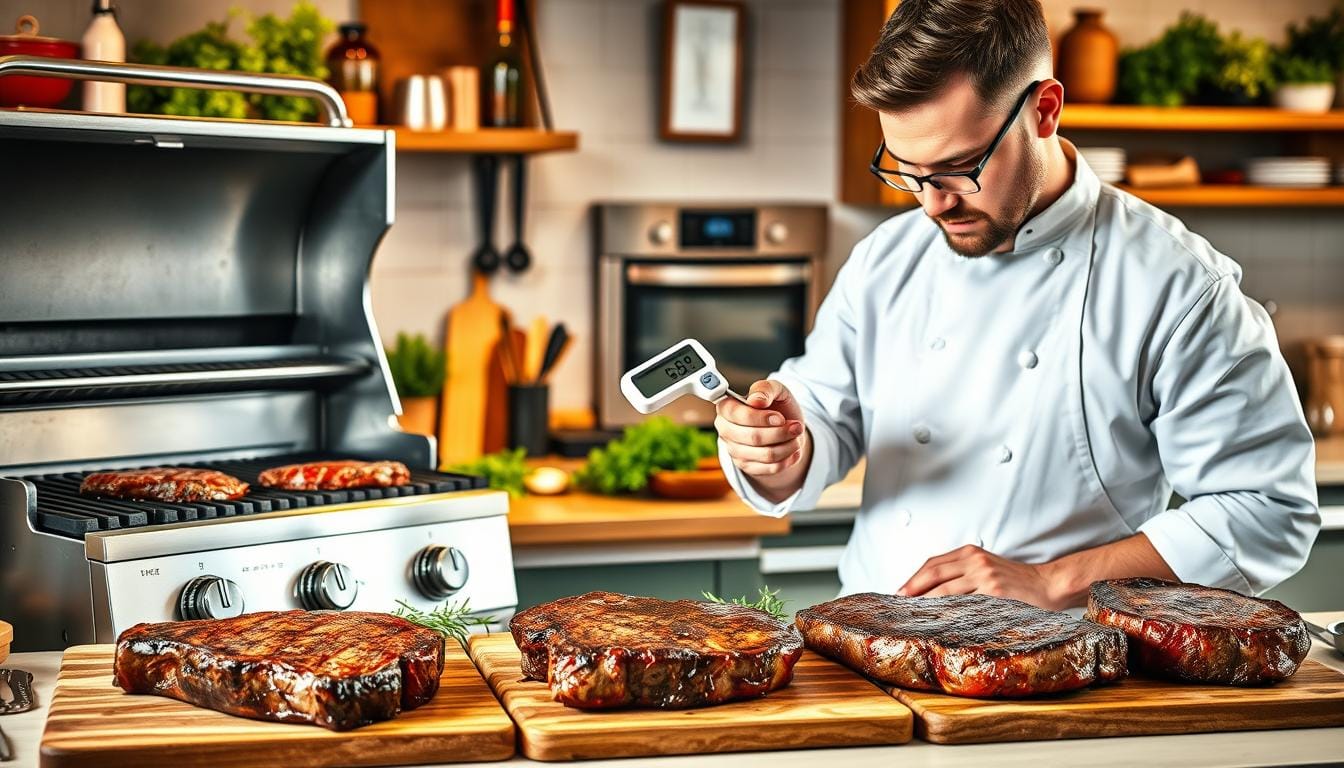
Stop Ruining Steak: Best Steak Temps You Must Know
Ever spent a lot on a top-notch steak, only to end up with a dry, tough piece? Getting the perfect sear is an art. But knowing the right cooking steak temperatures is the key to a restaurant-quality meal at home.
Many home cooks guess or rely on looks, which often leads to disappointment. By understanding exact steak temps, you can control your kitchen’s results. You’ll learn to avoid common mistakes and make sure every bite is juicy, tender, and just right.
Table of Contents
The Science Behind Perfect Steak Temps
Getting the perfect steak temperature is a science. It involves understanding muscle fibers and how heat works. When you cook a steak, you’re changing the meat’s structure.
Understanding Muscle Fibers and Heat
Muscle fibers in steak are made of proteins. These proteins tighten when heated. The heat changes the steak’s texture.
The denaturation of proteins starts at 120°F (49°C). This is why rare steak feels tender. As the temperature goes up to 130°F (54°C) to 135°F (57°C), the steak stays juicy.
Why Carryover Cooking Changes Everything
Carryover cooking is when the steak’s internal temperature keeps rising after it’s off the heat. This happens because the outer layers are hotter than the inside. The heat spreads out evenly.
“The temperature of the steak will continue to rise by 5-10°F (3-6°C) after it’s removed from the heat, so it’s essential to factor this into your cooking calculations.”
To deal with carryover cooking, remove the steak when it’s 5-10°F lower than your final temperature. This ensures it’s perfectly cooked.
| Doneness | Internal Temperature | Temperature After Resting |
|---|---|---|
| Rare | 120-125°F | 125-130°F |
| Medium Rare | 125-130°F | 130-135°F |
| Medium | 130-135°F | 135-140°F |
Essential Tools for Monitoring Beef Doneness
The secret to a perfect steak is knowing its internal temperature. You need the right tools for this. Guesswork won’t cut it if you want your steak just right.
Choosing the right thermometer is crucial. It’s the difference between a great steak and one that’s not. Not all thermometers are the same, though.
Choosing the Right Digital Instant-Read Thermometer
A digital instant-read thermometer is a must-have for steak lovers. These thermometers give quick, accurate readings. This lets you check your steak’s temperature without waiting too long.
Look for a thermometer that’s fast, accurate, and easy to use. A wide temperature range and quick response are important. A waterproof design is a bonus for easy cleaning. Brands that focus on cooking thermometers usually offer the best quality.
Why You Should Avoid Analog Dial Thermometers
Analog dial thermometers used to be common, but they have big drawbacks. They lack precision. This can mean your steak is overcooked or undercooked.
They also need calibration, which is a hassle. Digital instant-read thermometers are more accurate and easier to use. They’re the better choice for checking beef doneness.
Rare Steak Temp: Achieving the Perfect Red Center
Finding the perfect rare steak is all about the right temperature. A rare steak has a red, juicy inside that looks and tastes great. To get this, you need to know the science of cooking steak and the exact temperatures for a rare doneness.
Identifying the Target Internal Temperature
A steak is rare if it’s cooked to 120°F – 130°F (49°C – 54°C) inside. This keeps the steak red and juicy. The best way to check this is with a digital thermometer. Make sure to put it in the thickest part of the steak, away from fat or bone.
Remember, the steak will keep cooking a bit after it’s off the heat. So, take it out when it’s about 115°F – 125°F (46°C – 52°C) to avoid overcooking.
Texture and Flavor Profiles of Rare Beef
Rare steak is tender and has a rich flavor. Its low temperature keeps the juices in and makes the meat tender. A well-cooked rare steak has a soft, velvety texture inside and a crusty, caramelized crust outside, thanks to searing.
The taste of a rare steak is intense and beefy. It has a deep, meaty flavor that’s even better with a bit of char from cooking. Eating a rare steak is not just about taste; it’s also about the texture and how it looks.
Medium Rare Steak Temp: The Culinary Gold Standard
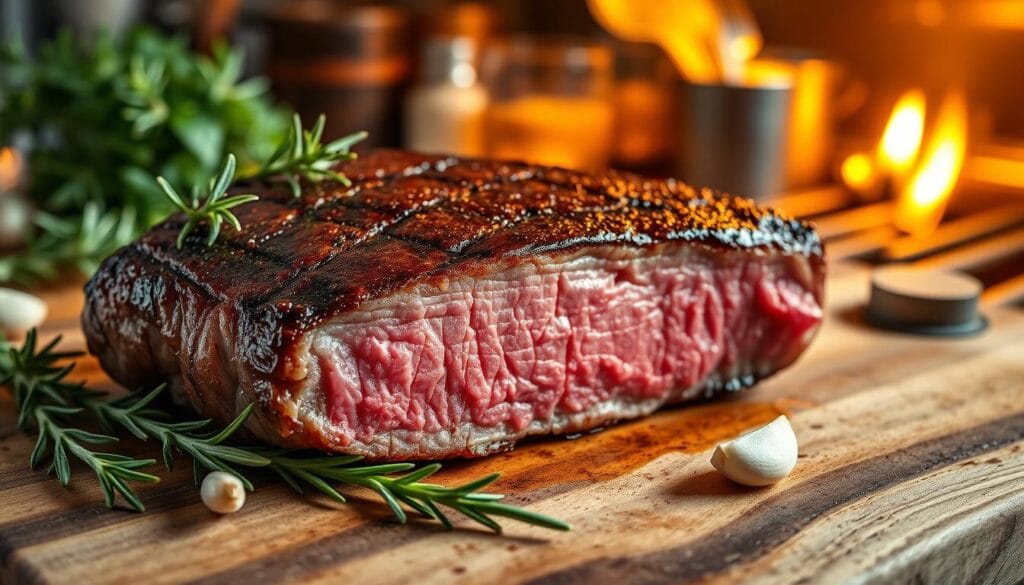
Medium rare steak temp is a favorite among chefs and food lovers. It strikes a perfect balance between a juicy inside and a crispy outside. The ideal internal temperature for medium rare steak is between 130°F and 135°F (54°C to 57°C). This makes it ideal for those who want a pink center but not too raw.
Why Chefs Prefer Medium Rare
Chefs love cooking steak to medium rare because it highlights the meat’s quality. At this temperature, the steak’s natural flavors are kept, and it stays tender. A perfectly cooked medium rare steak can make any meal special, offering a deep, beefy taste that’s both fulfilling and luxurious. It also lets the steak’s marbling and cut stand out.
Managing the Heat for a Consistent Pink Interior
To get a consistent pink inside, controlling the heat is key. Start by searing the steak at high heat to keep the juices in. Then, finish it at a lower heat to reach the perfect doneness. Using a digital instant-read thermometer is crucial for accuracy, ensuring your steak hits the mark. For medium rare, aim for 130°F to 135°F. Letting the steak rest after cooking helps keep the juices in, keeping the inside pink.
Medium and Medium Well: Balancing Juiciness and Firmness
Cooking steak is all about temperature and texture, especially for medium and medium well. Finding the right mix of juiciness and firmness is key for a great meal. It’s important to watch the internal temperature closely when cooking to these levels.
Cooking steak to medium doneness means it should be 140°F – 145°F (60°C – 63°C). The steak should still have a bit of pink in the middle but be mostly cooked. For medium well, aim for 150°F – 155°F (66°C – 68°C), with just a hint of pink left.
The Transition from Pink to Gray
As steak cooks from medium to medium well, it turns from pink to gray. This color change happens because proteins and myoglobin break down. To get a perfect medium or medium well steak, avoid overcooking. Overcooking can make the steak dry and tough.
Techniques to Prevent Drying Out Your Steak
To keep your steak juicy, use high heat for searing and gentle heat for finishing. This method, called the reverse sear method, helps keep juices in. Also, let the steak rest for a few minutes before serving. This lets the juices spread out, making the steak tender and flavorful.
Mastering the techniques for cooking steak to medium and medium well can make a dish that’s both tender and tasty.
Well Done Steak Temp: Flavor Without the Toughness
The idea that well done steak is always dry and tough is a myth. With the right cooking methods, you can make a well done steak that’s both tasty and tender. It’s all about knowing the right techniques and temperatures.
Debunking the Myth That Well Done Must Be Dry
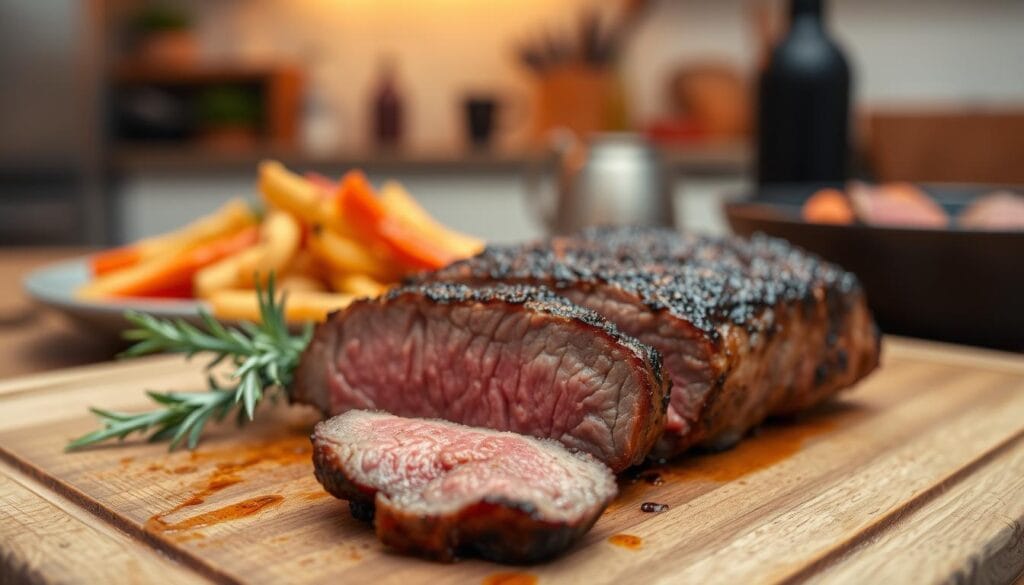
Many think that well done steak is always dry and tasteless. But this isn’t true. The secret to a juicy well done steak is in the cooking method and temperature control. Using a digital instant-read thermometer helps ensure your steak reaches the perfect internal temperature of at least 160°F (71°C) for well done, without getting too dry.
The quality of the steak also matters a lot. Opt for a cut that’s naturally tender and has good marbling. Ribeye or strip loin are great choices because they stay juicy even when cooked well done.
Low and Slow Methods for Better Results
Low and slow cooking methods are great for tender and flavorful well done steak. Braising or using a slow cooker can break down the meat’s connective tissues, making it tender.
For grilling or pan-searing, try “low and slow searing.” Cook the steak at a lower temperature for a longer time, then finish with a quick sear. This method ensures even doneness without drying out the steak.
Mastering the Beef Doneness Chart
Understanding the beef doneness chart is key to perfect steak cooking. It guides you to the right internal temperature for your steak. This ensures it’s cooked just how you like it.
The chart is more than just temperatures. It shows how the steak’s internal temperature affects its texture and taste. By mastering this, you’ll cook steaks that are always juicy and full of flavor.
Visualizing the Temperature Spectrum
The temperature range for steak doneness goes from rare to well done. Rare steaks are between 120°F – 130°F (49°C – 54°C). Well-done steaks are cooked to 160°F – 170°F (71°C – 77°C).
Seeing this range helps you grasp how temperature changes the steak’s feel and taste. As the temperature goes up, the steak gets firmer and less juicy. The beef doneness chart helps you find the perfect balance of texture and taste.
Adjusting for Different Cuts of Meat
Different meats need different temperatures because of their thickness and fat. For example, a thick cut like a ribeye might need a bit lower temperature. This prevents the outside from burning before the inside is right.
Using the beef doneness chart well means knowing these differences and adjusting for them. This way, you can cook all sorts of steaks perfectly, no matter their cut or thickness.
Common Mistakes That Ruin Your Steak
The secret to a great steak isn’t just in how you cook it. It’s also about avoiding common mistakes. Even with the right techniques, simple errors can ruin your meal.
The Dangers of Overcrowding the Pan
One big mistake is cooking too many steaks at once. This lowers the pan’s temperature. As a result, your steaks steam instead of sear, losing flavor and texture.
To fix this, cook steaks one at a time. This lets each steak cook evenly and get a nice crust. If you’re cooking for many, use multiple pans or cook in batches.
Ignoring the Importance of the Resting Period
Another mistake is skipping the resting period after cooking. This step lets juices spread evenly, making the steak tender and flavorful. Without it, your steak might be dry and tough.
To rest your steak right, take it off the heat and let it sit for 5-10 minutes before slicing. This simple step can greatly improve your steak’s quality.
Common Steak Cooking Mistakes and Their Fixes
| Mistake | Consequence | Fix |
|---|---|---|
| Overcrowding the pan | Steaks steam instead of sear | Cook steaks one at a time or in batches |
| Ignoring the resting period | Dry and tough steak | Let the steak rest for 5-10 minutes before slicing |
By avoiding these common mistakes, you can greatly improve your steak-cooking skills. Enjoy a perfectly cooked meal every time.
Advanced Techniques for Precision Cooking
Getting the perfect steak doneness is more than just using a thermometer. It takes skill and precision. Knowing the right internal temperatures for each doneness level is key. But, the real challenge is cooking it consistently well.
Advanced cooking techniques like the reverse sear method and sous vide cooking help a lot. They offer more control than traditional grilling or pan-searing. This is especially true for getting the doneness right all the way through the steak.
Reverse Sear Method Explained
The reverse sear method cooks the steak in a low oven first, then sears it hot. This method cooks the steak more evenly. It helps avoid overcooking the outside before the inside is just right.
To use this method, season your steak and cook it in a 200°F oven until it’s 10-15°F below your target temperature. Then, sear it hot in a skillet to get a crispy crust.
This technique works great for thicker steaks. It makes sure the heat spreads evenly. You can get a perfectly cooked interior, whether you want a rare steak temp or a medium rare steak temp.
Using Sous Vide for Guaranteed Accuracy
Sous vide cooking seals the steak in a bag and cooks it in a water bath. It cooks the steak to the exact same temperature all over. This method avoids overcooking.
To cook a steak sous vide, season it, seal it in a bag, and cook it in the water bath at your desired temperature. For a medium rare steak, set the water bath to 132°F.
Sous vide cooking keeps the temperature steady. This means your steak is always cooked to perfection. After cooking, sear the steak in a hot pan to add a flavorful crust. This mix of precise cooking and a crispy exterior is a favorite among chefs and home cooks.
Conclusion
Cooking steak to the perfect doneness is a skill that makes your meals better. Knowing the right internal temperatures for each doneness level helps you cook a great steak every time. Whether you like your steak rare, medium rare, or well done, a beef doneness chart can guide you.
For those who prefer a well done steak, getting the temperature right is key. A well done steak should be between 160°F and 170°F. Using a digital instant-read thermometer ensures your steak is safe to eat and still tender and flavorful.
With the knowledge from this article, you can cook steaks that you love. Try different cuts and cooking methods to find your favorite. With practice and patience, you’ll get better at cooking delicious and satisfying steaks.