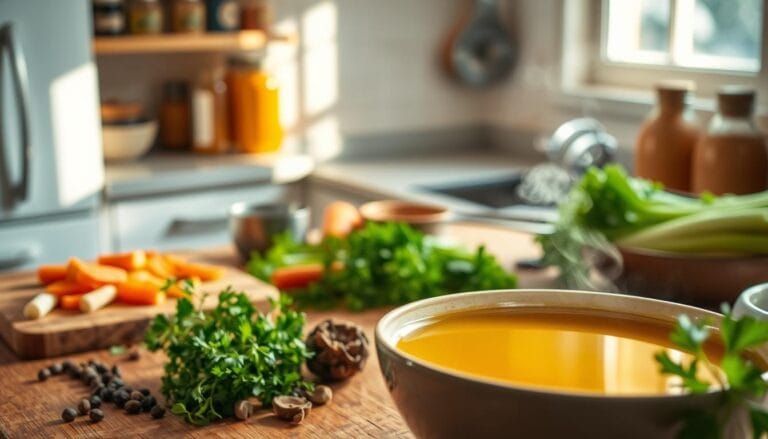
how long does it take to boil chicken
Preparing chicken at home can feel like a guessing game. You want it to be perfect for salads, soups, or casseroles. Knowing exactly how long to boil chicken is key to tender and flavorful meat.
Learning this simple skill lets you control the chicken’s texture and moisture. It helps avoid the common error of overcooking. Overcooking can make the chicken dry and rubbery.
Temperature is crucial for success. By following these basic steps, you can make delicious chicken every time. This is true whether you’re boiling it in your own kitchen.
Table of Contents
Understanding the Basics of How to Boil Chicken
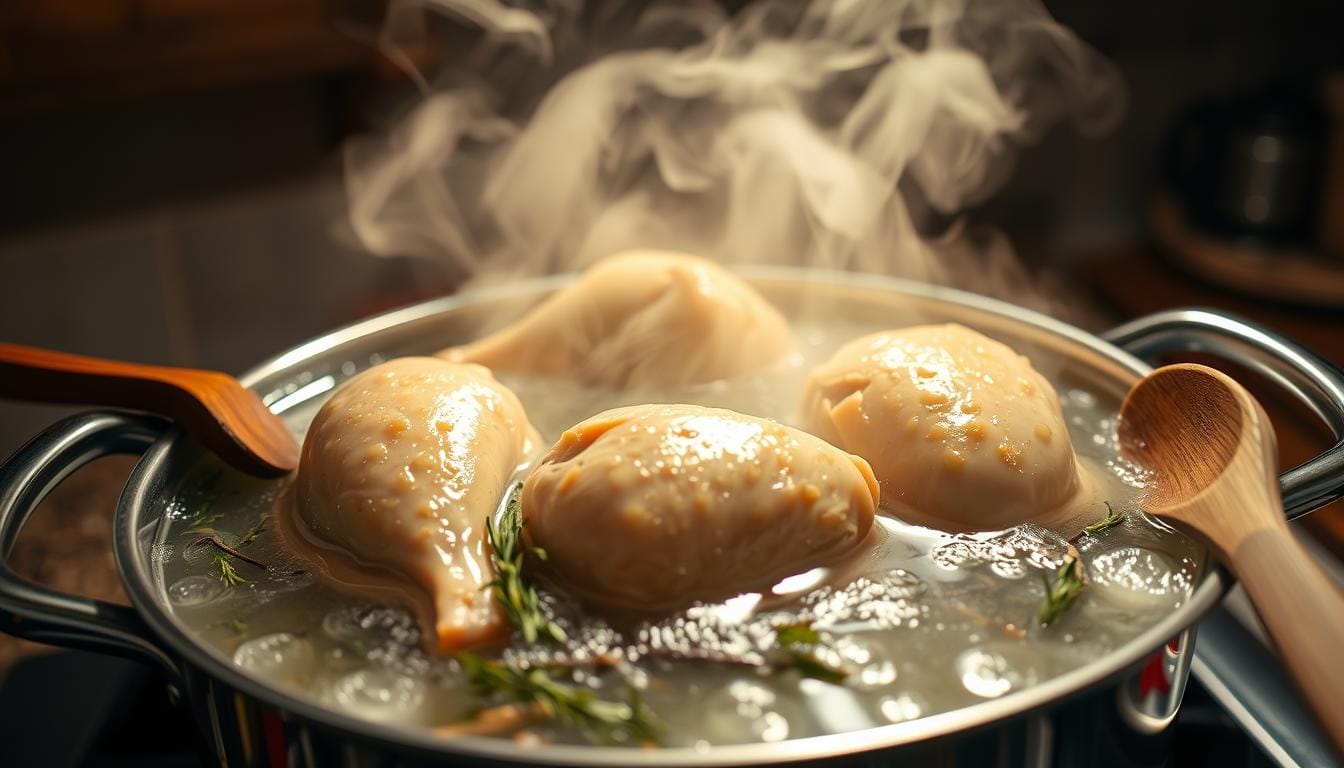
Boiling chicken is a gentle cooking method that gives consistent results. It’s not about a lot of bubbling. Instead, a steady, controlled simmer is key. Maintaining a gentle simmer keeps the meat tender, not tough or rubbery.
Professional chefs often use this method. It ensures even heat distribution in the meat. Avoiding a rolling boil helps prevent muscle fibers from tightening too fast. This careful approach is why many kitchens rely on it for various recipes.
You don’t need fancy tools to boil chicken. Just a large, heavy-bottomed pot and enough liquid to cover the poultry. Also, long-handled tongs are crucial for safely handling the meat.
Having a reliable kitchen timer is also important. It helps you avoid overcooking. By mastering these basics, you’ll boil chicken with confidence every time.
Factors That Influence Boiling Time
Several factors affect how long you need to boil chicken to make it safe. Knowing these helps keep your chicken juicy, not dry. Whether you’re making a quick meal or a big batch for later, understanding these points is crucial.
The Impact of Chicken Cut and Size
The size of your chicken matters a lot. Smaller pieces, like tenders or cubed breasts, cook fast because heat gets to the center quickly. But bigger cuts, like whole breasts or thighs, take longer to cook through.
“Cooking is a craft that relies on understanding the relationship between heat, time, and the physical properties of your ingredients.”
Bone-in Versus Boneless Varieties
Bones affect cooking time. Bone-in pieces slow down heat getting to the meat’s center. So, you need to cook bone-in chicken longer than boneless.
Boneless chicken cooks evenly, making it great for fast recipes. But bone-in chicken tastes better and stays juicier. Always check the meat’s temperature with a thermometer.
Fresh Versus Frozen Chicken Considerations
Boiling frozen chicken is possible but needs careful planning. You’ll need to cook it for about 50 percent longer to thaw it in the pot. Safety is key, so keep the water simmering to avoid bacterial growth.
Thawing chicken in the fridge overnight is usually best. If you’re short on time, watch the water temperature closely. Proper preparation ensures safe boiling, no matter the chicken’s state.
Preparing Your Chicken for the Pot
Great flavor begins long before you start cooking. It starts with how you prepare your raw chicken. By taking a few extra minutes, you can make your chicken taste amazing in your favorite dishes.
Cleaning and Trimming Techniques
First, rinse your chicken under cold water to get rid of any dirt. Then, use a sharp knife to carefully trim away excess fat or loose skin. This keeps your broth clear and your chicken tasting fresh.
Seasoning the Water for Maximum Flavor
The water you use is key to flavoring your chicken. Boiling chicken in plain water makes it taste bland. Instead, create a flavorful poaching liquid that makes the chicken taste amazing.
“The secret to a perfect boil lies in the aromatics you choose; they are the silent architects of flavor.”
Selecting Aromatics and Herbs
Make your water flavorful by adding fresh ingredients. Use halved onions, smashed garlic cloves, and chopped celery. You can also add thyme, rosemary, or parsley stems for extra taste. These ingredients create a fragrant environment that infuses into the meat.
The Role of Salt and Peppercorns
Salt is crucial for bringing out the chicken’s natural juices. Add a generous pinch of kosher salt to season the meat from the inside. Whole black peppercorns add a subtle, earthy heat that enhances the dish’s flavor.
Step-by-Step Guide for Boiling Chicken Breasts
Many home cooks find it hard to get the right texture. But, this step-by-step guide for boiling chicken makes it easy. Boiling chicken breasts needs care to avoid dry or rubbery meat. By using these techniques, your chicken will always be tender and juicy.
Setting the Proper Water Temperature
The key to success is the water’s heat. Never boil your chicken too hard, as it makes the meat tough. Instead, aim for a gentle simmer with small bubbles.
Keeping the heat low is key for quality. It cooks the meat evenly and keeps the juices in. This is the base of any easy boiled chicken recipe that focuses on taste and texture.
Monitoring the Internal Temperature
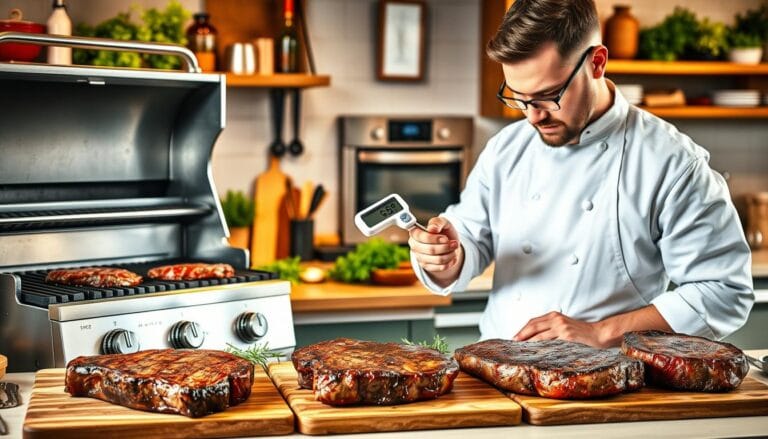
Visual signs aren’t always reliable when cooking chicken. You need a meat thermometer to check the chicken’s internal temperature. Aim for the safe 165°F threshold without going over.
When the thermometer shows this temperature, take the chicken out right away. Sitting in hot water for a bit longer can overcook it. This step-by-step guide for boiling chicken helps you avoid mistakes that spoil the dish.
| Cooking Stage | Water State | Internal Temp |
|---|---|---|
| Initial Heat | Rapid Boil | Room Temp |
| Active Cooking | Gentle Simmer | 140°F – 155°F |
| Completion | Remove from Heat | 165°F |
By following this easy boiled chicken recipe, your meal will be safe and tasty. Watching your thermometer closely ensures a perfect dish for salads, soups, or shredded chicken.
Boiling Chicken Thighs and Drumsticks
Dark meat, like thighs and drumsticks, has more fat and connective tissue. It needs a slower cooking time to be perfect. This method turns tough fibers into tender, flavorful bites.
Adjusting Times for Dark Meat
Dark meat is more forgiving than white meat but needs longer cooking. Aim for a gentle simmer to break down collagen well. Patience is your best tool for these denser cuts.
Thighs and drumsticks should simmer for 40 to 50 minutes. This long time ensures the meat is tender and the fat is rendered. Rushing can make the meat chewy or hard to remove from the bone.
“The secret to perfect dark meat lies in the slow breakdown of connective tissue, which turns a tough cut into a melt-in-your-mouth experience.”
Ensuring Tenderness in Thighs
Keep the water at a low, consistent temperature for the best texture. Check if the meat pulls away from the bone easily. Properly cooked dark meat should be tender enough to shred with a fork.
If you’re making stews or curries, remove the skin before boiling. This reduces oil in your broth and keeps the meat moist. Use the guide below to manage cooking times well.
| Chicken Cut | Estimated Time | Internal Temp |
|---|---|---|
| Chicken Breast | 15-20 Minutes | 165°F |
| Chicken Thighs | 40-45 Minutes | 175°F |
| Drumsticks | 45-50 Minutes | 175°F |
How to Boil Chicken Whole for Stocks and Soups
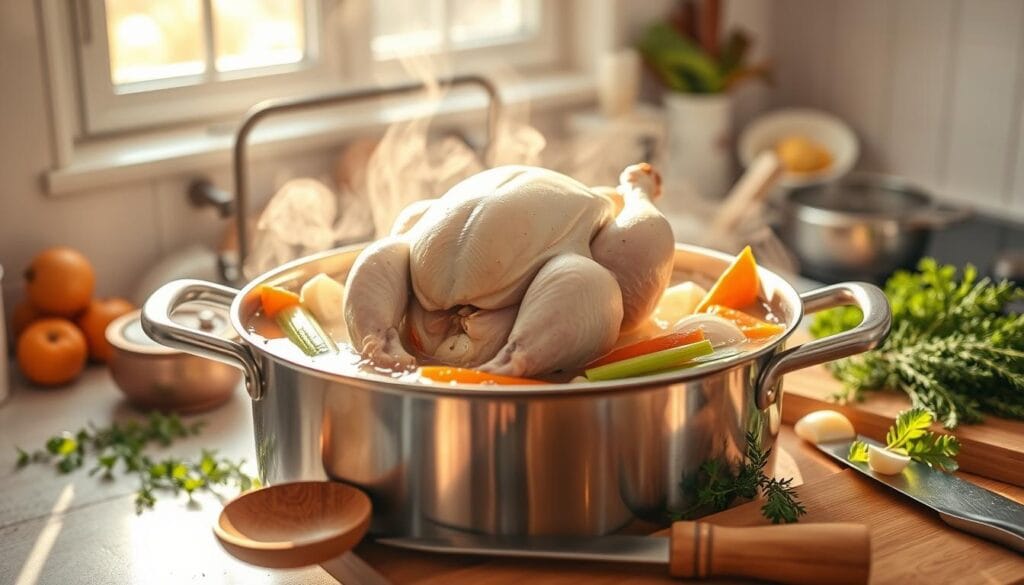
Boiling a whole chicken is the best way to make a top-notch broth. This method pulls out deep flavors and makes the meat tender for meals. Using the whole bird makes your stock rich and complex, unlike store-bought ones.
Managing the Large Pot Requirements
You need a big stockpot to fit the whole chicken. A small pot can cause uneven cooking and skin tears. Make sure your pot has at least two inches of clearance at the top to avoid spills.
Put the chicken in the pot and add enough cold water to cover it. Keep the heat low and steady. High heat can make the skin break and the meat tough, so keep the heat low while it cooks.
Skimming the Surface for Clarity
As the water heats up, foam and impurities will rise. It’s key to skim them off often with a fine-mesh skimmer or a large spoon. This step is crucial for a clear, professional-grade broth.
Keep skimming for the first twenty minutes. If you skip this, the impurities can cloud the broth. By being consistent, you ensure a clean, tasty base for your soups and sauces.
Safety First: Avoiding Common Boiling Mistakes
When boiling chicken, you aim for great taste and safety. Even small mistakes can ruin the dish or pose health risks. Follow these tips for boiling chicken to keep your cooking top-notch.
Preventing Overcooking and Tough Texture
Many people find boiled meat too stringy or rubbery. This often happens when the water boils too long. Instead, keep the water at a gentle simmer to keep the meat tender.
“Cooking is a subject you can never know enough about. There is always something new to discover.” — Julia Child
Don’t leave the meat in the pot after it’s cooked. Taking it out quickly stops it from drying out. Using these tips for boiling chicken helps your dish stay juicy and easy to shred.
Recognizing Signs of Undercooked Poultry
When cooking with raw poultry, safety is key. You need to know when the meat is fully cooked. Just looking at the color isn’t enough, as the inside might still be raw. A digital meat thermometer is your best friend for accuracy.
| Indicator | Undercooked | Perfectly Cooked |
|---|---|---|
| Internal Temp | Below 165°F | 165°F |
| Juices | Pink or Red | Clear |
| Texture | Rubbery/Soft | Firm/Opaque |
Always check the thickest part of the meat to ensure it’s at 165°F. If the juices are pink, heat it up again. Learning these tips for boiling chicken will make you confident in serving safe, tasty meals.
The Best Way to Boil Chicken for Shredding
Getting the right texture for tacos, salads, and wraps starts with boiling chicken right. The best way to boil chicken makes the meat soft and easy to shred. This way, your chicken stays juicy and tender.
Properly cooked chicken is key for many boiled chicken for recipes. Boiling gently keeps the chicken’s juices inside. This gentle heat makes the chicken tender and soft.
Cooling Techniques for Easier Handling
When the chicken hits 165°F, take it out of the water right away. Put it on a clean cutting board or tray to cool. Letting it rest for at least ten minutes helps the juices spread evenly.
Don’t shred the chicken while it’s still hot. It will lose moisture fast. If you’re in a rush, chill it in the fridge for a bit. But make sure it’s still warm, as warm fibers shred better than cold ones.
Tools for Efficient Shredding
When it’s time to shred your boiled chicken for recipes, the right tools make a big difference. Using two forks is the classic way. It lets you control the shred size, perfect for salads.
For big batches, a stand mixer is the best way to boil chicken and shred it fast. Just put the warm chicken in the bowl and use the paddle on low speed. It shreds the chicken evenly and quickly, saving you time.
Creative Boiled Chicken Meal Ideas
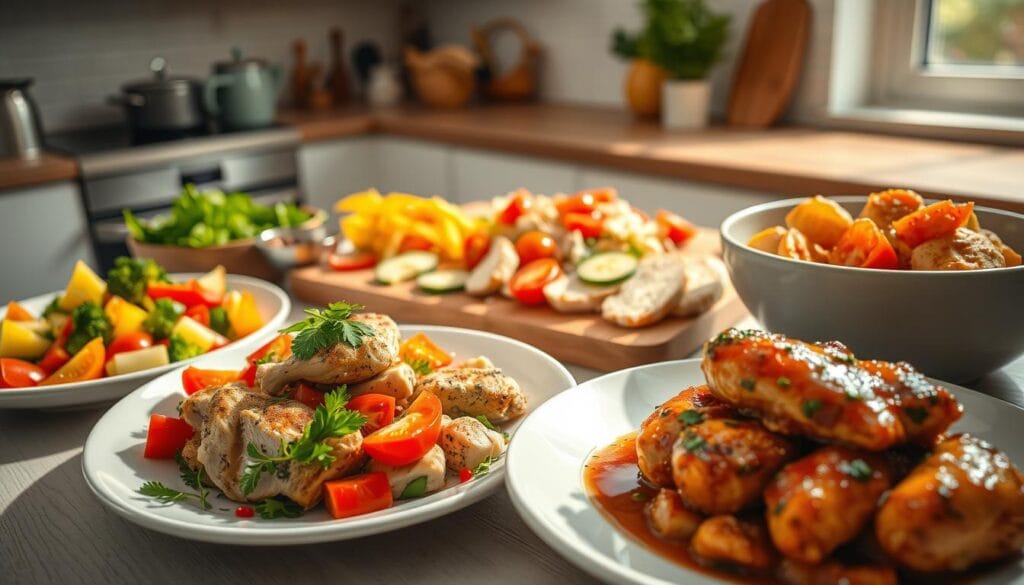
Having pre-cooked chicken in your fridge opens up many culinary possibilities. Once you master boiling, you have a versatile protein source for any meal. This simple method lets you focus on flavors, not cooking times, during a busy week.
Using Boiled Chicken in Salads and Wraps
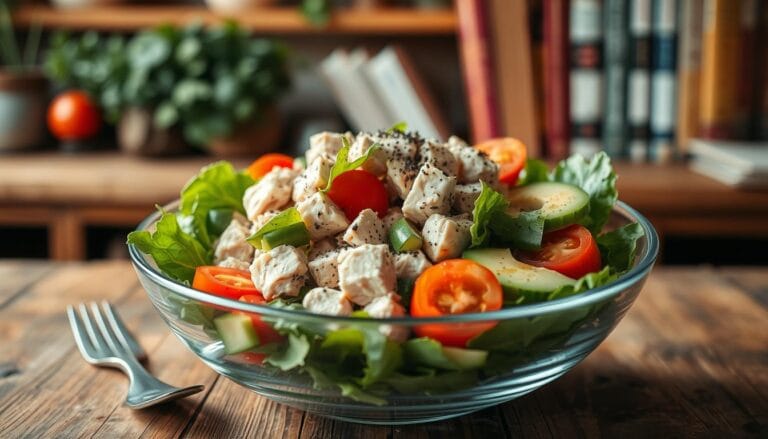
Adding protein to fresh salads is a great way to use your chicken. Shred the meat and mix it with greens, vinaigrette, and crunchy veggies. It adds a light yet filling touch to your salads.
Wraps are also a quick and healthy option for lunch or dinner. Spread hummus or avocado on a tortilla, add chicken, and roll it up. This way, you get a balanced meal without spending hours cooking.
Incorporating Chicken into Casseroles and Soups
When it’s cold outside, a warm, comforting dish is perfect. Use an easy boiled chicken recipe to prepare the meat ahead. Then, mix it into your favorite creamy casserole. The chicken soaks up the sauce, making each bite tender and flavorful.
Soups also benefit from pre-cooked chicken. Add it to noodle soups or hearty vegetable stews towards the end of cooking. This keeps the chicken moist. These boiled chicken meal ideas make it easy to serve your family a nutritious dinner every night.
Nutritional Benefits of Boiling Chicken
Choosing to boil chicken is a smart move for clean eating. This method lets you cook protein without using lots of oil or butter. It keeps your meals light and full of nutrients.
Comparing Boiling to Frying and Roasting
Frying adds a lot of saturated fats and calories to your diet. Roasting can be healthy, but it often needs oil to keep the meat moist. Boiling, on the other hand, is a clean choice for your nutrition goals.
| Cooking Method | Added Fat | Calorie Impact |
|---|---|---|
| Boiling | None | Low |
| Frying | High | Very High |
| Roasting | Moderate | Moderate |
Water-based cooking, like boiling, cuts out hidden calories in oils and sprays. This makes boiling chicken a key part of tracking your macros. You get the protein you need without extra additives.
Retaining Moisture Without Added Fats
Lean meat can sometimes be dry or tough. But boiling chicken gently keeps it juicy and tender. This is done without using extra fats.
Retaining moisture is key for a great meal. Since chicken cooks in its own juices, it stays moist and flavorful. Knowing these benefits of boiling chicken helps you make tasty, healthy meals that support your health goals.
Pro Tips for Boiling Chicken Perfectly Every Time
To master the best way to boil chicken, focus on precision and patience. Boiling chicken is simple, but small changes in your method can make a big difference. These tips will help keep your chicken juicy and safe to eat every time.
Using a Meat Thermometer for Accuracy
Don’t rely on just looking at the chicken when cooking. To boil chicken perfectly, get a good digital meat thermometer. It gives you the exact internal temperature.
Put the probe into the thickest part of the meat, away from the bone. Food safety says chicken should be 165°F inside. This method ensures your chicken is cooked right without drying it out.
Resting the Meat After Boiling
Resting the meat is a key tip for boiling chicken that’s often missed. After taking the chicken out of the water, let it rest on a cutting board or plate for 5 to 10 minutes. This lets the juices spread evenly.
If you cut into the chicken right away, the juices will run out. This makes the meat dry and tough. Waiting a bit before cutting is the secret to tender, juicy chicken. Here’s why these steps are crucial for great results.
| Technique | Primary Benefit | Impact on Quality |
|---|---|---|
| Digital Thermometer | Ensures Food Safety | Prevents Overcooking |
| Controlled Simmer | Maintains Texture | Avoids Toughness |
| Proper Resting | Retains Moisture | Enhances Flavor |
Conclusion
Cooking simple meals at home is a great start. You now know how to cook healthy proteins easily and well.
Learning to boil chicken perfectly is a big help on busy weeknights. It makes your meat stay moist and ready for any dish.
Using a digital meat thermometer ensures your food is safe and tasty. You’ll get better at managing heat and timing, making meals for your family always a hit.
Try these tips on your favorite dishes this week. Share your success with friends or try new seasonings to keep things interesting.
Keep practicing to get even better in the kitchen. You’re all set to make your home cooking better by boiling chicken perfectly every time.