7 Proven Herbs for Anxiety Relief Backed by Science
Many people in the United States are turning to natural wellness to handle daily stress. You might be searching for gentle ways to support your mental health. Looking into herbs for anxiety could be a good step toward better emotional balance.
These plants are a solid base for your health journey. By adding nature to your routine, you can calm your nervous system. Modern studies back what traditional practices have known for centuries.
In this article, we’ll look at seven plants recognized in scientific studies. You’ll see how these natural choices can make life’s challenges easier. Knowing the science behind these options helps you make informed decisions for your well-being.
Understanding the Science of Herbal Anxiety Relief
Learning how herbs work in your body is key to managing anxiety. When you eat certain plants, their active parts go into your blood. They then talk to your brain and hormones. These natural remedies for anxiety change the chemical signals that affect your mood and stress.
How Adaptogens and Nervines Affect Your Nervous System
Botanical medicine sorts plants by their effects on the body. Adaptogens help your body handle stress by balancing your HPA axis. They help keep you steady in tough times.
Nervines, on the other hand, directly calm your nervous system. These herbal remedies for stress and anxiety boost calming neurotransmitters like GABA. Adaptogens build long-term strength, while nervines ease sudden anxiety or restlessness.
| Category | Primary Function | Best Used For |
|---|---|---|
| Adaptogens | Systemic balance | Chronic stress |
| Nervines | Nervous system support | Acute anxiety |
| Sedatives | Relaxation induction | Sleep disturbances |
The Importance of Evidence-Based Herbal Medicine
Just because something works for someone else doesn’t mean it will work for you. Look for natural remedies for anxiety backed by scientific studies. This way, you know they’re safe and effective.
Scientific proof means the herbal remedies for stress and anxiety you choose are clean and strong. By choosing evidence-based options, you avoid bad products and side effects. Always pick products with research to support them for your health.
Ashwagandha: The Adaptogenic Powerhouse
Ashwagandha is a top pick for herbal supplements for anxiety because of its adaptogenic powers. This ancient root helps your body deal with the stress of today’s world. It keeps you calm, even when things get tough.
Mechanism of Action in Cortisol Regulation
This herb works by adjusting the HPA axis, your body’s stress center. When stressed, your body releases cortisol, causing unease if levels stay high.
Ashwagandha helps balance cortisol levels, stopping the “fight or flight” response. It keeps you grounded. It acts as a shield against daily stress.
Clinical Evidence for Stress Reduction
Studies show ashwagandha is a top herbal remedy for stress and anxiety. Double-blind studies found it improves well-being. It lowers stress scores in users.
The herb’s active compounds, withanolides, calm the nervous system. They promote relaxation without making you sleepy. This makes it great for staying alert while managing anxiety.
Recommended Dosage and Usage Guidelines
Consistency is key when using ashwagandha. Most studies use 300 mg to 600 mg of extract daily. Take it in two parts with meals for better absorption.
| Form | Typical Dosage | Best Use Case |
|---|---|---|
| Capsules | 300-600 mg | Convenience and precise dosing |
| Powder | 1/2 to 1 teaspoon | Mixing into smoothies or warm milk |
| Liquid Extract | 1-2 ml | Fast absorption for immediate support |
Start with a low dose to see how you react. If you’re on other meds, talk to your doctor first. This ensures safe use of this herbal remedy for stress and anxiety.
Chamomile: More Than Just a Bedtime Tea
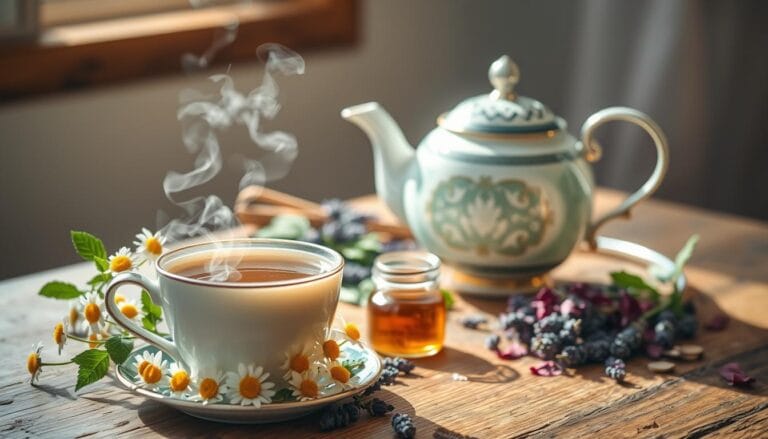
Chamomile is more than just a calming drink. It has special compounds that work with your brain. Many turn to it as a top anxiety relief herb. Its calming effects are backed by science today.
Apigenin and Its Role in Anxiety Management
Chamomile’s secret is a flavonoid called apigenin. It binds to brain receptors, calming your nervous system. This helps you feel calm without the sleepiness of drugs.
“The therapeutic potential of chamomile lies in its ability to gently modulate the nervous system, offering a natural pathway to tranquility.”
Comparing Tea Infusions to Concentrated Extracts
Drinking tea is comforting, but the active compounds can differ. Tea infusions have a gentle effect for daily use. But for stronger anxiety herbal treatments, extracts are better.
Concentrated extracts give a fixed amount of apigenin. This is key for tackling severe symptoms. Make sure the extract is labeled with the apigenin percentage.
Potential Interactions and Safety Precautions
Natural remedies need caution, especially with other meds. Chamomile can affect blood thinners or sedatives. Always talk to your doctor before using herbal supplements.
If you’re allergic to daisy family plants, avoid chamomile. Prioritizing safety lets you enjoy its benefits without risks. Start with a small dose to see how you react.
Lavender: Aromatherapy and Oral Supplementation
Lavender is a standout in anxiety herbal treatments for its two-way benefits. It’s not just a pretty plant; it’s backed by science for emotional balance. You can use its scent and take it orally to tackle stress.
The Impact of Linalool on the Limbic System
Linalool, lavender’s key compound, affects your nervous system. When you smell it, these molecules reach your brain’s emotional center. This lowers cortisol levels and brings calm.
“Aromatherapy is a gentle, non-invasive way to signal the brain that it is time to shift from a state of high alert to one of relaxation.”
Comparing Inhaled Lavender to Oral Capsules
Deciding between aromatherapy and oral supplements depends on your needs. Inhalation acts fast, while capsules release slowly. Many find the best results from using both.
| Method | Primary Benefit | Best Use Case |
|---|---|---|
| Aromatherapy | Rapid sensory relief | Acute stress moments |
| Oral Capsules | Systemic, long-term support | Chronic anxiety management |
| Combined | Holistic stabilization | Daily wellness routine |
Integrating Lavender into Your Daily Routine
Adding lavender to your day helps keep emotions balanced. Use essential oil in your workspace for focus. For ongoing support, take oral supplements with meals for steady absorption.
Regular use of lavender is key. It helps you face challenges with more strength and calm.
Lemon Balm: A Traditional Remedy for Calm
Herbalists have used lemon balm for centuries to calm the spirit. It’s a fragrant mint family member known for its natural wellness benefits. Today, it’s a top choice for anxiety relief.
Historical Use and Modern Scientific Validation
Ancient healers used lemon balm to improve mood and focus. They also used it to calm a racing heart or a restless mind. These uses have led to modern research.
Today’s studies confirm lemon balm’s benefits. It helps keep GABA levels healthy, which promotes relaxation. This makes it a key part of herbal anxiety treatments.
Synergistic Effects When Combined with Other Herbs
Pairing lemon balm with other herbs can enhance its effects. Mixing it with valerian or chamomile creates a deeper sense of calm. This combination targets the nervous system in multiple ways.
Combining herbs can tackle both physical and mental stress. Experts see these blends as top anxiety treatments. They offer a balanced way to manage stress.
How to Prepare Lemon Balm for Maximum Efficacy
Choosing the right way to prepare lemon balm is key. Fresh leaf infusions are great for a daily mood boost. Just steep the leaves in hot water for ten minutes.
For a stronger effect, try standardized extracts. These concentrated forms give you a consistent dose of calming compounds. Always choose high-quality, organic options for the best results.
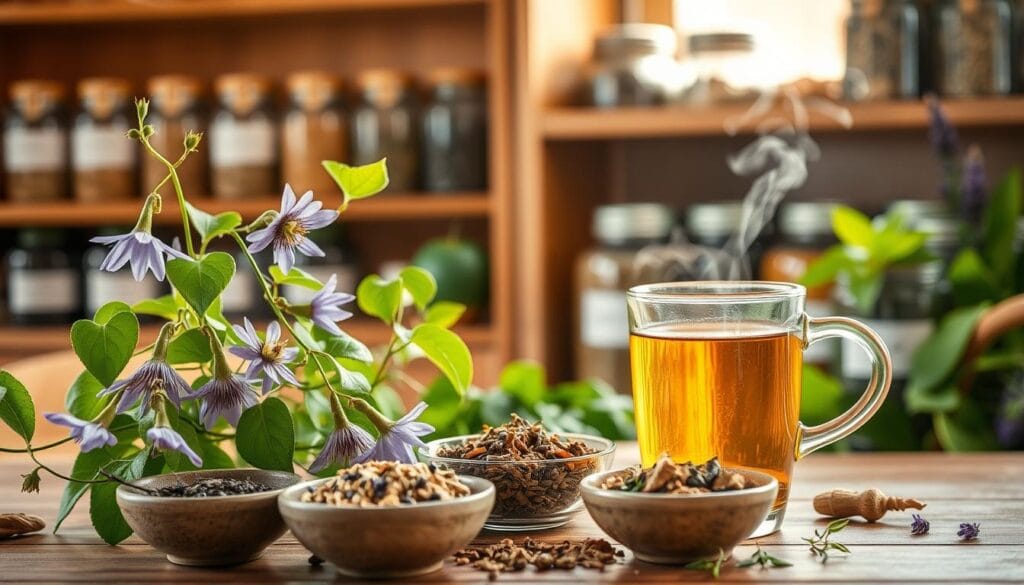
Passionflower: Supporting GABA Levels
If you’re looking for herbal medicine for anxiety, passionflower is a great choice. It’s backed by science and helps you deal with stress. It works with your body’s chemistry to bring balance.
The Role of Gamma-Aminobutyric Acid in Anxiety
Passionflower works by affecting gamma-aminobutyric acid, or GABA. This chemical calms your brain. When GABA is balanced, you feel more calm and clear.
Passionflower boosts GABA in your brain. This reduces anxious thoughts. It’s a top calming herb for anxiety for those who want to stay alert but calm.
Clinical Studies on Generalized Anxiety Disorder
Studies on passionflower show it’s good for anxiety. It’s as effective as some medicines for short-term relief. It lowers worry without making you feel too tired.
These findings make passionflower a trusted herbal medicine for anxiety. Many people feel less tense after using it. It’s a key part of a wellness plan.
Choosing the Right Passionflower Formulation
Finding the right supplement can be hard. But, quality is key. Look for standardized extracts. Choose products from trusted makers that focus on purity.
| Formulation Type | Absorption Speed | Best Use Case |
|---|---|---|
| Liquid Tincture | Fast | Immediate stress relief |
| Standardized Capsules | Moderate | Consistent daily support |
| Dried Tea Leaves | Slow | Relaxing evening ritual |
Choosing the right calming herbs for anxiety depends on your lifestyle. Tinctures are good for quick relief. Capsules are best for long-term support.
Valerian Root: Managing Sleep-Related Anxiety
Valerian root is known as a top calming herb for anxiety when sleep is a problem. Many struggle with racing thoughts and restlessness at night. Improving sleep quality helps manage emotions better during the day.
Addressing the Anxiety-Insomnia Cycle
Anxiety and insomnia create a cycle that affects your life. Not sleeping raises stress, making it harder to sleep the next night. Breaking this cycle is key to balance.
Valerian root is a gentle sedative. It quiets the mind for restful sleep without the drowsiness of synthetic aids. It’s a natural choice for a better night’s sleep.
Scientific Findings on Sleep Quality and Calmness
Research shows valerian root works with GABA receptors in the brain. This helps regulate nerve impulses and promotes deep relaxation. It can help you fall asleep faster.
This herb also keeps you asleep all night. It’s known for reducing physical tension. Many feel more refreshed and less stressed after using it.
Timing Your Intake for Optimal Results
Timing is crucial with valerian root. Take it 30 to 60 minutes before bed. This lets the compounds work as you get ready for sleep.
Consistency is important for lasting sleep improvements. Some see effects right away, while others notice them after a few weeks. Start with a low dose to see how you react before increasing.
Rhodiola Rosea: Enhancing Stress Resilience
Rhodiola rosea is a top choice for herbs to reduce anxiety. It tackles both exhaustion and mental stress. If you’re always tired, it might help you feel more alive. It’s great for those who feel overwhelmed due to burnout.
Boosting Energy While Reducing Anxiety Symptoms
Rhodiola is different from sedatives that make you sleepy. It stabilizes your mood and gives you a gentle energy boost. It helps your body handle stress without the crash from caffeine. This way, you stay productive and calm.
The Science of Fatigue-Induced Stress
Long-term stress can make you feel drained. Even simple tasks seem hard. Rhodiola helps by controlling cortisol, the stress hormone. This keeps your body balanced during tough times.
The table below shows how Rhodiola compares to other natural stress helpers:
| Herb | Primary Benefit | Best For |
|---|---|---|
| Rhodiola Rosea | Energy & Resilience | Burnout & Fatigue |
| Ashwagandha | Cortisol Balance | Deep Relaxation |
| Lemon Balm | Mood Elevation | Occasional Tension |
Safety Profile and Long-Term Use Considerations
Rhodiola is usually safe, but use it wisely. Experts say to cycle the herb. Take it for weeks, then take a break. This keeps it effective and prevents dependence.
Start with a small dose to see how you react. It can be energizing, so avoid it before bed. Used right, it’s a solid choice for herbs to reduce anxiety and fight exhaustion.
Safety Considerations and Best Herbs for Anxiety
Start your mental health journey by talking to your doctor. Many find relief with natural methods, but safety is key. Your doctor can check if herbs for anxiety are right for you.
Consulting Your Healthcare Provider Before Starting
Before starting new herbs, talk to your doctor or a licensed herbalist. They’ll check your health history for any issues. This ensures you pick the best herbs for anxiety for your health.
Identifying Potential Drug-Herb Interactions
Natural doesn’t always mean safe, especially with meds. Some herbal supplements for anxiety can change how your body handles drugs. This could lead to bad side effects or less effective meds. Always tell your doctor about all meds and vitamins you’re taking.
Quality Control: How to Choose Reliable Supplements
The supplement world isn’t as tightly regulated as meds. So, choosing a good brand is crucial. Look for products that have been third-party tested for purity and strength. Good brands will give you a Certificate of Analysis to prove their products are safe.
When looking for herbal supplements for anxiety, choose companies that follow Good Manufacturing Practices (GMP). High-quality, open brands let you safely add best herbs for anxiety to your life. These steps keep you safe while you try natural stress relief.
Conclusion
Improving your mental health starts with smart choices about what you use. Adding natural remedies for anxiety to your day can lead to more calm and stability.
You now know how certain plants can affect your body. These herbs can help you manage stress in a way that’s good for you.
Choose high-quality supplements from trusted brands like Gaia Herbs or Herb Pharm. Make sure they’re tested by third parties to ensure they’re safe and effective.
Talk to your doctor before starting new supplements. This helps avoid any bad reactions with your current medicines.
Being consistent is key to lasting success. Keep track of how these natural remedies help you to find what works best for you.
Even small changes can make a big difference in your life. Use these herbs as part of a bigger plan that includes good sleep, healthy food, and mindfulness.
Your journey to a balanced life begins with today’s choices. Keep exploring and caring for your mental health.