Powerful Herbal Syrup for Lung Health You Can Make at Home
Keeping your lungs healthy is key to a lively, active life. As lung health awareness grows, many seek natural ways to boost their health. You don’t need pricey supplements with the right kitchen ingredients.
Making your own herbal syrup is easy and effective for lung care. It uses traditional plant-based methods to create a potent remedy for better breathing. These methods have been trusted for ages, using plants to calm and protect your airways.
This guide will teach you to turn simple kitchen items into a comforting drink. You’re starting a journey to better Lung Health through herbalism. Follow these easy steps to enhance your comfort and health today.
Table of Contents
Understanding the Importance of Lung Health
Your lungs are key to connecting your body with the world outside. Every breath you take, your respiratory system works hard. It pulls oxygen into your blood and removes waste gases like carbon dioxide. This process is crucial for your energy and strength.
Since your lungs face pollutants every day, keeping them healthy is vital. Learning about your lungs helps you make choices that protect your health. Small, daily habits can greatly improve your breathing and overall well-being.
Being proactive about your health can prevent breathing problems. Here’s a table that shows important factors for lung health.
| Category | Supportive Habits | Risk Factors |
|---|---|---|
| Environment | Clean indoor air | Secondhand smoke |
| Lifestyle | Regular exercise | Sedentary behavior |
| Strategy | Lung disease prevention | Ignoring early symptoms |
| Nutrition | Antioxidant-rich foods | High processed sugar |
Your respiratory system needs ongoing care to fight off stressors. By focusing on lung disease prevention, you’re investing in a better life. Pay attention to how your body reacts to different settings and adjust your habits for better breathing.
Key Herbal Ingredients for Respiratory Support
Building a strong respiratory system starts with the right plants. These plants have special healing powers. They work together to keep your lungs healthy and airways clear.
Mullein Leaf for Mucus Relief
Mullein leaf is great for easing congestion. It’s a strong expectorant that helps get rid of extra mucus. This makes breathing easier and more comfortable.
Thyme for Antimicrobial Properties
Thyme is more than a kitchen spice; it’s a body protector. It has natural compounds that fight off harmful invaders. Adding thyme keeps your airways clean and safe.
Ginger for Inflammation Reduction
Ginger is a key anti-inflammatory agent that soothes irritated tissues. It helps calm stressed or inflamed lungs. This root is crucial for a balanced respiratory system and healthy lungs all year.
Gathering Your Supplies and Equipment
Starting to make your own respiratory remedies means picking the right tools and quality herbs. Taking charge of your health means every step helps your pulmonary care goals. Setting up your workspace right is key to making effective herbal syrups at home.
Essential Kitchen Tools
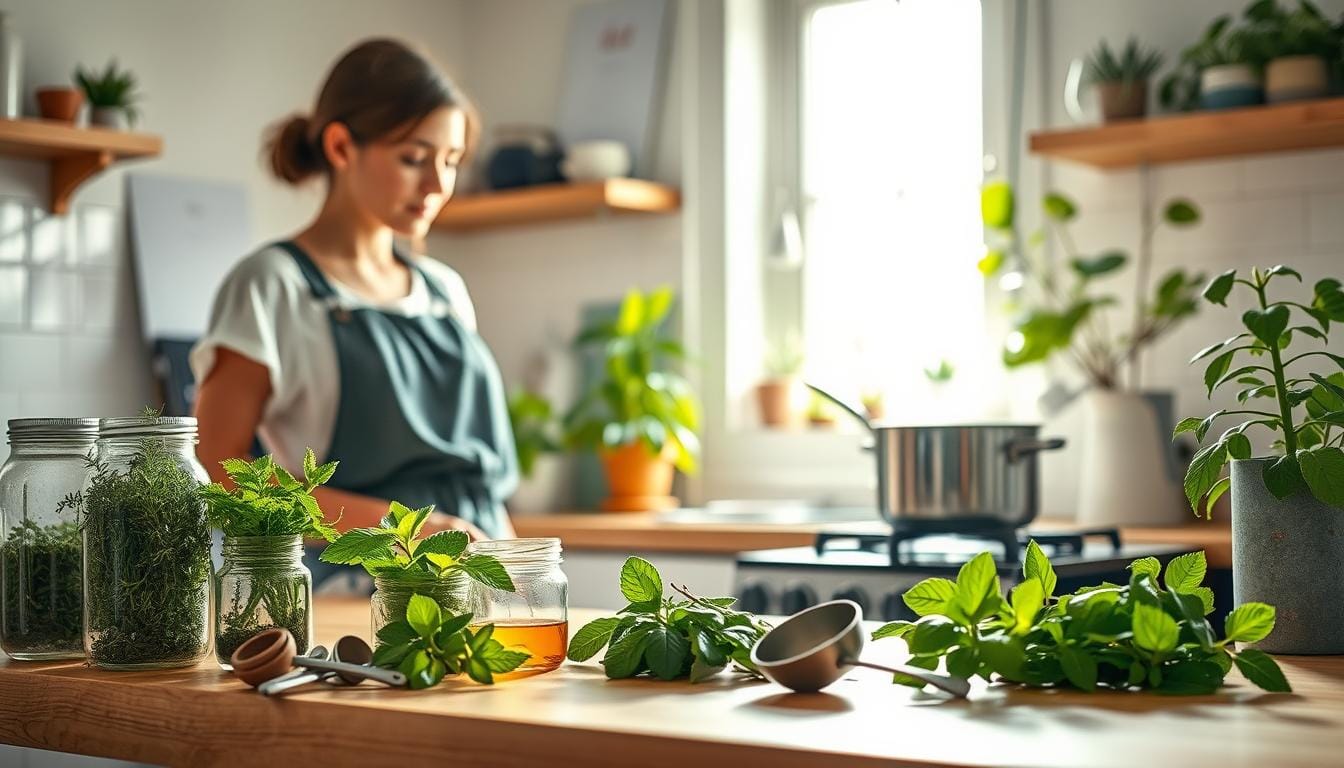
To make a consistent syrup, you need some basic kitchen items. A heavy-bottomed stainless steel pot is crucial. It heats evenly and keeps your herbal mix from burning.
You’ll also need a fine-mesh strainer or cheesecloth to get rid of plant bits after simmering. And don’t forget sterilized glass jars for storing. Glass keeps your syrup pure and strong.
Sourcing High-Quality Organic Herbs
The quality of your syrup depends on the herbs you choose. Always go for certified organic ingredients. This ensures your syrup is free from harmful stuff.
When looking for suppliers, find ones that share info on how they harvest. Good vendors tell you where their plants come from and how they dry them. Buying top-notch herbs means your syrup will work best.
Preparing Your Herbal Base
Making a high-quality syrup begins before you start cooking. How you handle your ingredients greatly affects the syrup’s quality. By focusing on cleanliness and precision, you make sure your syrup helps your lung function well.
Cleaning and Drying Your Ingredients
Begin by rinsing your fresh herbs under cool water to get rid of dust or dirt. Dry them well with a clean towel or paper towels. Removing excess moisture is key to prevent mold when storing.
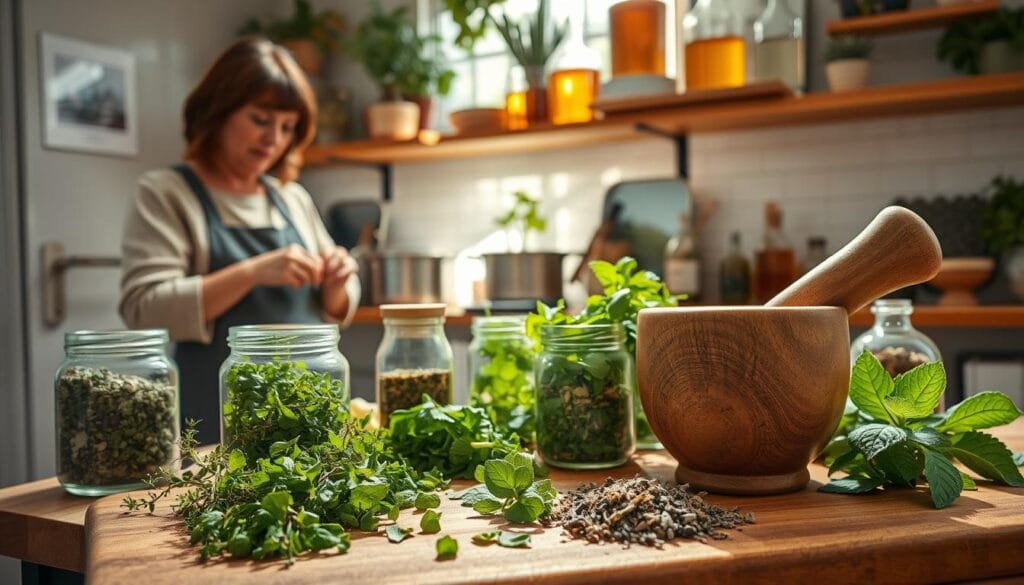
If using dried herbs, check for debris or color changes. Make sure your area is clean to avoid contamination. A clean base is crucial for a safe and strong extract that supports healthy lung function.
Measuring Ratios for Potency
Consistency is key for a reliable herbal syrup. Use a kitchen scale for measuring herbs, not cups. This ensures the right strength for your lung function needs.
A good starting point is one part dried herb to four parts water by weight. You can tweak this ratio for your desired strength. Precise measurements help you get the same quality every time.
Keep a log of the weights you use. This helps you improve your recipe over time. Proper preparation keeps your syrup effective and safe for your wellness routine.
The Extraction Process
Unlocking your botanicals’ full potential starts with gentle simmering. This step turns raw ingredients into a concentrated liquid that boosts healthy lungs. By controlling your pot’s environment, you keep vital oils and compounds from evaporating.
Simmering Techniques for Maximum Benefit
Avoid a rolling boil at all costs. High heat can damage plant structures, losing the lung health benefits you aim for. Instead, use a low, steady simmer with just a few small bubbles.
Keep your pot covered to trap steam, which holds the most potent oils. If the liquid reduces too fast, lower the heat. A consistent, gentle temperature is key to a high-quality syrup.
“Nature does not hurry, yet everything is accomplished. In herbalism, patience is the primary ingredient for true potency.”
Steeping Times for Optimal Strength
After simmering, the steeping phase lets water absorb the herbs’ properties. The time needed varies by herb type. Roots and barks need longer to release their essence than soft leaves or flowers.
Here’s a guide for finding the right steeping time:
| Ingredient Type | Simmer Time | Steep Time |
|---|---|---|
| Soft Leaves (Mullein) | 15 Minutes | 30 Minutes |
| Dried Roots (Ginger) | 45 Minutes | 60 Minutes |
| Hard Barks/Berries | 60 Minutes | 2 Hours |
Monitoring these times is crucial for the best healthy lungs results. Rushing can lead to a weak infusion lacking lung health benefits. Always choose slow, steady extraction for a syrup that’s both tasty and effective.
Sweetening and Preserving Your Syrup
Sweetening your syrup is key to keeping it fresh. Choosing the right ingredients makes your remedy effective and tasty. These lung health tips will guide you in balancing the herbal flavors with a sweet finish.
Choosing Between Raw Honey and Maple Syrup
Raw honey is great because it soothes coughs and coats your throat. It has enzymes that help your lungs. But, make sure it’s raw to keep its benefits.
Maple syrup is a good choice for vegans. It’s full of minerals and has a unique taste. When picking a sweetener, think about what your family needs.
| Sweetener | Primary Benefit | Best Use Case |
|---|---|---|
| Raw Honey | Soothing & Antimicrobial | Dry, scratchy throats |
| Maple Syrup | Mineral-rich & Vegan | Plant-based preferences |
| Vegetable Glycerin | Alcohol-free solvent | Long-term shelf stability |
Adding Natural Preservatives
To keep your syrup fresh, you might need natural preservatives. Honey itself is a preservative, but a bit of apple cider vinegar or alcohol can help too. These lung health tips stress the importance of a stable syrup for daily use.
Always use a clean glass jar for your syrup. Store it in a cool, dark spot to keep your herbs fresh. This way, your remedy will always be ready when you need it.
Step-by-Step Guide to Crafting the Syrup
You’re ready to mix your herbal infusion with a sweetener for the best results. This step makes your syrup tasty and effective. By following these steps, you’ll get the most out of your homemade remedy for lung health.
Combining Ingredients
Start by warming your herbal extract a bit if it’s cooled down. Then, slowly add your honey or maple syrup. Keep stirring until it’s smooth and syrupy. Stirring well is important to mix everything perfectly.
Don’t let the mixture boil. High heat can ruin the good stuff. Keeping it warm helps keep the ingredients’ quality. This careful step is crucial for the lung health benefits you want.
Straining and Bottling
After mixing well, put a fine-mesh strainer or cheesecloth over a clean glass jar. Slowly pour the syrup through it to catch the solids. Getting rid of solids is key to keeping it fresh and smooth.
Once strained, use a funnel to pour it into a clean, sealed glass bottle. Close it well and mark the date. This last step keeps your syrup ready for when you need it next.
Proper Storage and Shelf Life
After making your lung support syrup, keeping it fresh is key. Proper storage helps keep your syrup good and safe. Follow a few easy steps to keep your syrup fresh for longer.
Refrigeration Requirements
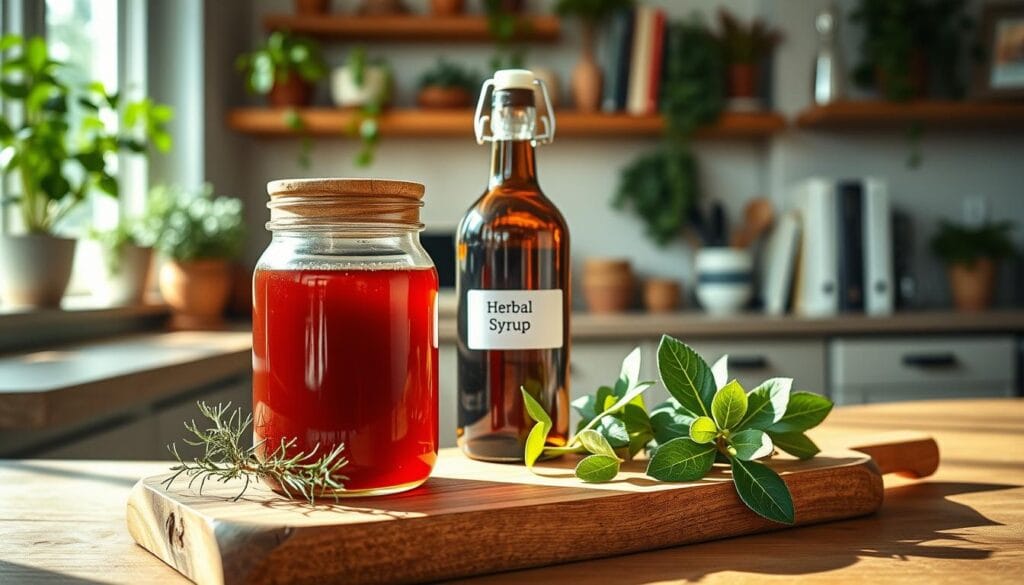
Your syrup, made with honey or maple syrup, needs to stay cool. Always keep it in the refrigerator to stop bacteria from growing. Use a clean, airtight glass bottle to keep it safe from moisture and germs.
It’s smart to label your bottles. Write the date you made it on the glass with a permanent marker or sticker. This helps you know when it’s time to make more syrup.
Signs of Spoilage to Watch For
Always check your syrup before using it. Look for visible signs of mold or if it looks cloudy. If you see fuzzy stuff, throw it away for your safety.
Your nose can also tell if the syrup is bad. If it smells sour or off, it’s time to get rid of it. If something doesn’t smell right, it’s best to make a new batch.
| Storage Factor | Best Practice | Expected Shelf Life |
|---|---|---|
| Temperature | Constant refrigeration | Up to 3 months |
| Container Type | Airtight glass bottle | Maintains potency |
| Labeling | Date of creation | Ensures safety |
Recommended Dosage and Usage Tips
Finding the right amount of herbal syrup is key for long-term health. Everyone reacts differently, so start with a small amount. Consistency is the foundation of any effective wellness routine, especially for your respiratory system.
Daily Maintenance for Lung Function
A standard serving size is one teaspoon, taken once or twice a day. This gentle approach helps keep your lung function in check. You might prefer taking it in the morning or evening to soothe your throat.
Always listen to how your body feels after each dose. If you feel any discomfort, reduce the amount or frequency. These simple lung health tips help you use the syrup effectively while supporting your lung health.
Adjusting Intake During Seasonal Changes
When seasons change or pollen counts rise, you might need more support. You can increase your intake to three times a day. Stay tuned to your body’s signals during these times.
If your respiratory system needs extra help, you can temporarily increase your usage. Once you feel better, go back to your usual routine. Following these lung health tips ensures you’re always caring for your lung health right.
| Usage Scenario | Recommended Frequency | Typical Serving Size |
|---|---|---|
| Daily Maintenance | 1-2 times per day | 1 Teaspoon |
| Seasonal Support | 3 times per day | 1 Teaspoon |
| Occasional Relief | As needed | 1/2 to 1 Teaspoon |
Safety Precautions and When to Consult a Doctor
Your journey toward better respiratory health should always be guided by caution and informed decision-making. Natural ingredients offer many benefits, but using them wisely is key. It’s important to know how your body reacts to new substances.
Identifying Potential Allergic Reactions
Before trying any herbal syrup, be aware of how your immune system might react. Even natural herbs can cause sensitivities in some people. Start with a very small amount to watch for any bad reactions.
Common signs of an allergic reaction include skin rashes, itching, or swelling of the throat and tongue. If you have trouble breathing or get hives, stop using the syrup right away and see a doctor. Prioritizing your safety ensures your efforts toward lung disease prevention are safe and effective.
Interactions with Conventional Medications
Many people use herbal syrups with their prescribed treatments, but it’s important to be careful. Some herbs can affect how your body processes drugs, leading to side effects. Always talk to your doctor or pharmacist about your herbal use.
Your doctor can tell you if certain ingredients might affect your current medications. This teamwork is crucial for modern pulmonary care. By keeping your medical team in the loop, you make your lung disease prevention plan safer.
| Safety Action | Why It Matters | Recommended Frequency |
|---|---|---|
| Patch Testing | Detects skin sensitivities | Before first use |
| Medication Review | Prevents drug interactions | Before starting new herbs |
| Symptom Monitoring | Identifies early allergic signs | Daily during initial use |
| Professional Consultation | Ensures clinical safety | Annually or as needed |
Conclusion
Making your own herbal syrup is a great way to help your body with nature’s power. You know how to pick the best ingredients and do it right for the best results.
Putting lung health first is key to staying healthy for a long time. This way, you stay full of energy all year round.
Being consistent is crucial when you use these natural remedies every day. Always watch how your body reacts to get the best results for you.
You have the power to improve your breathing health by making smart choices. Tell your friends or family about natural health if they care about it too. Your dedication to lung health makes your life better.